Designing Flavor: Why the Grinder Is Becoming Coffee’s Most Critical Brewing Tool
Credit: Ceado
Sponsored Content by Ceado
For decades, espresso innovation has focused on precision.
Modern espresso machines can now manage temperature, pressure, and flow rate with extraordinary precision. Yet despite this progress, one of the most influential variables in coffee extraction has often remained comparatively unstable: grinding.
In cafés around the world, baristas continuously adjust grind size, dose, and recipes to compensate for fluctuations caused not only by coffee itself, but also by the grinder. Heat buildup, retention, burr expansion, and inconsistent particle distribution can all alter extraction behavior throughout the day, especially during periods of intense workflow.
As espresso machines have become increasingly precise, the grinder has emerged as one of the last major frontiers for flavor consistency.
At Ceado, this realization became the foundation of a broader philosophy: Designing Flavor.
Rather than viewing the grinder simply as a machine that crushes coffee beans, Ceado approached grinding as an active part of flavor development, a system capable of controlling the physical variables that directly influence extraction and sensory expression in the cup.
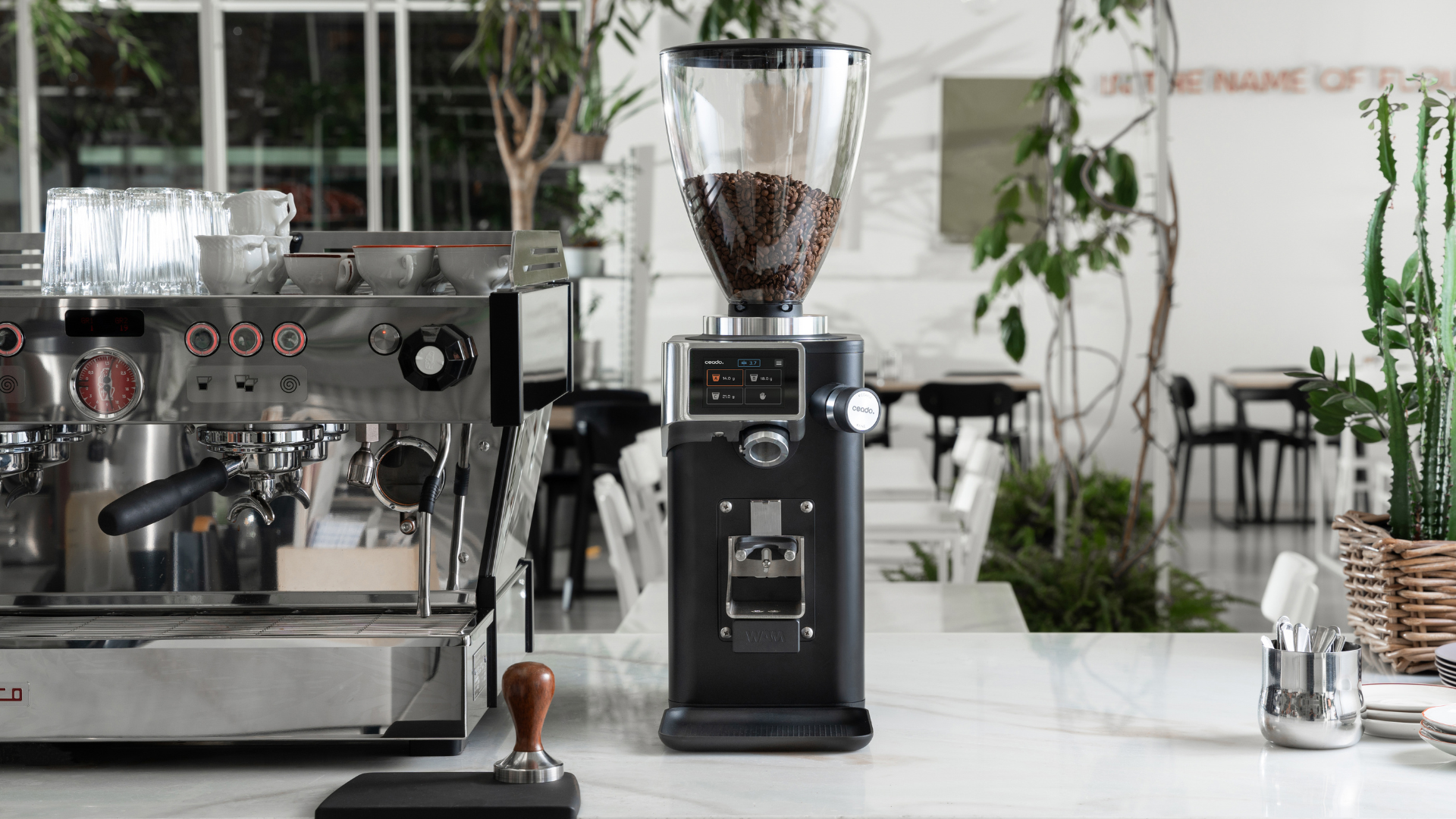
This philosophy led to the development of the REV Series, a family of grinders designed not around individual features, but around a holistic approach to flavor consistency, workflow efficiency, and waste reduction.
From Bean Crushing to Flavor Control
Traditional grinders operate passively. They grind coffee, generate heat, retain grounds between doses, and leave the barista to manage the consequences through continuous adjustment.
Credit: Ceado
However, coffee extraction is highly sensitive to physical changes occurring during grinding.
When coffee grounds increase in temperature, their resistance to water flow changes, often accelerating extraction and altering flavor balance. Retained coffee trapped inside the grind chamber oxidizes between shots and absorbs heat from the grinder body, introducing stale particles into fresh doses. Even thermal expansion within the burr chamber can slightly alter burr distance during service, affecting particle size distribution and extraction consistency.
These variables become even more critical in today’s specialty coffee environment, where lighter roast profiles, high-density coffees, and increasingly expressive si4ngle-origins demand a far higher level of precision than in the past.
Ceado’s approach with the REV Series was based on a simple but ambitious question:
What if grinders could actively manage these variables instead of merely generating them?
A System-Level Rethink
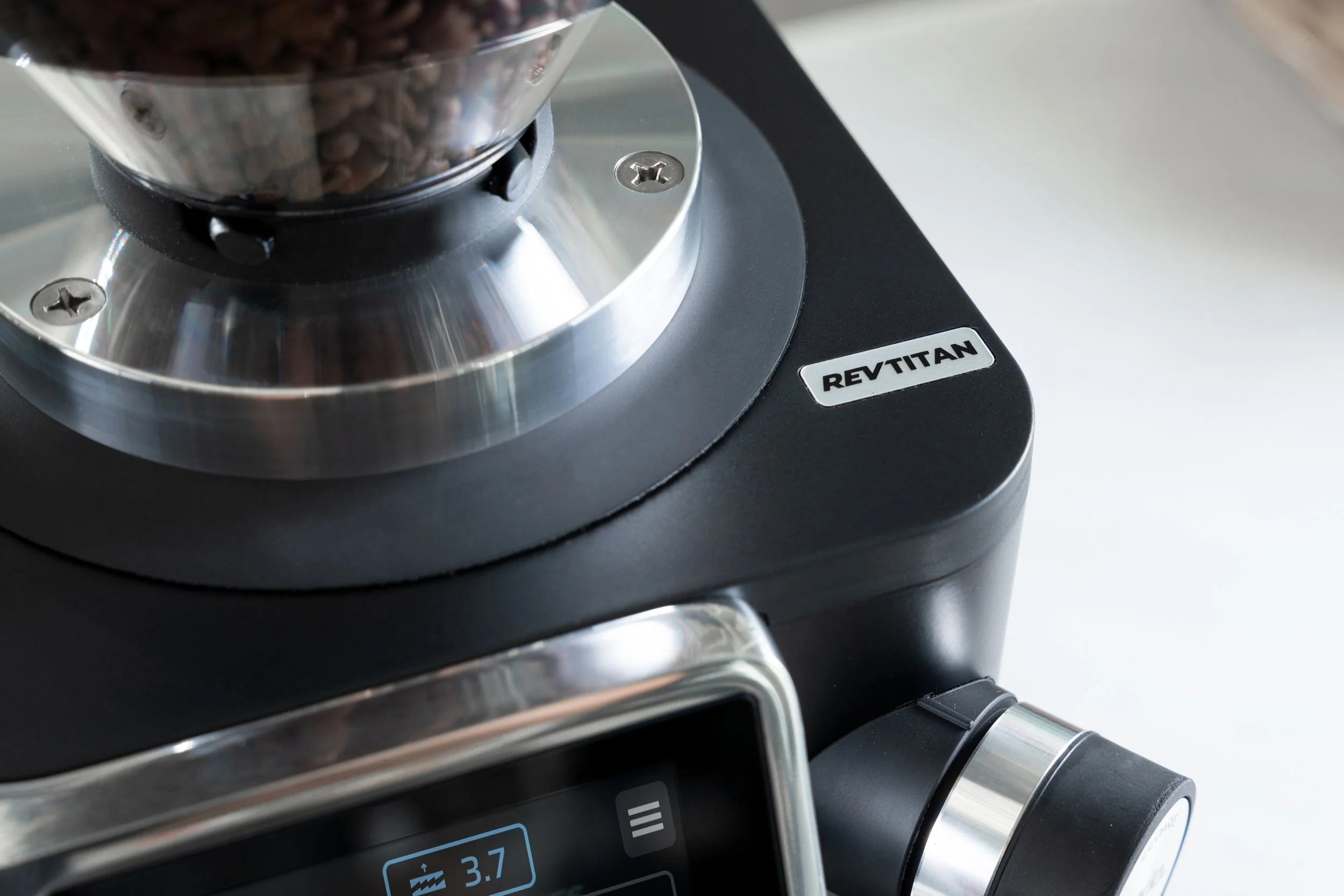
The REV Series was developed as an integrated flavor-control platform designed to stabilize the key parameters that influence extraction. It is structured as a family of grinders — including REV Zero, REV Titan, and REV Steel — each addressing different priorities such as maximum flavor clarity, grinding speed or accessibility.
Rather than focusing on isolated innovations, the project brought together technologies developed over many years into a unified grinding system.
One of the most important areas of focus was thermal stability.
The REV Series incorporates a Grounds Temperature Management system (GTM), built around a substantial metal mass surrounding the burr chamber that continuously absorbs and dissipates heat generated during grinding. The burrs are also mechanically isolated from the motor, while internal airflow is carefully managed to maintain stable grinding conditions throughout service.
This stability matters because temperature fluctuations directly affect extraction behavior. By maintaining more consistent ground coffee temperatures, baristas can achieve greater repeatability between shots during both peak rushes and slower service periods.
Retention was another major area of development.
Coffee trapped between doses is not only wasted coffee; it also introduces variability into extraction. Retained grounds oxidize rapidly, lose volatile aromatic compounds, and carry additional heat into subsequent shots.
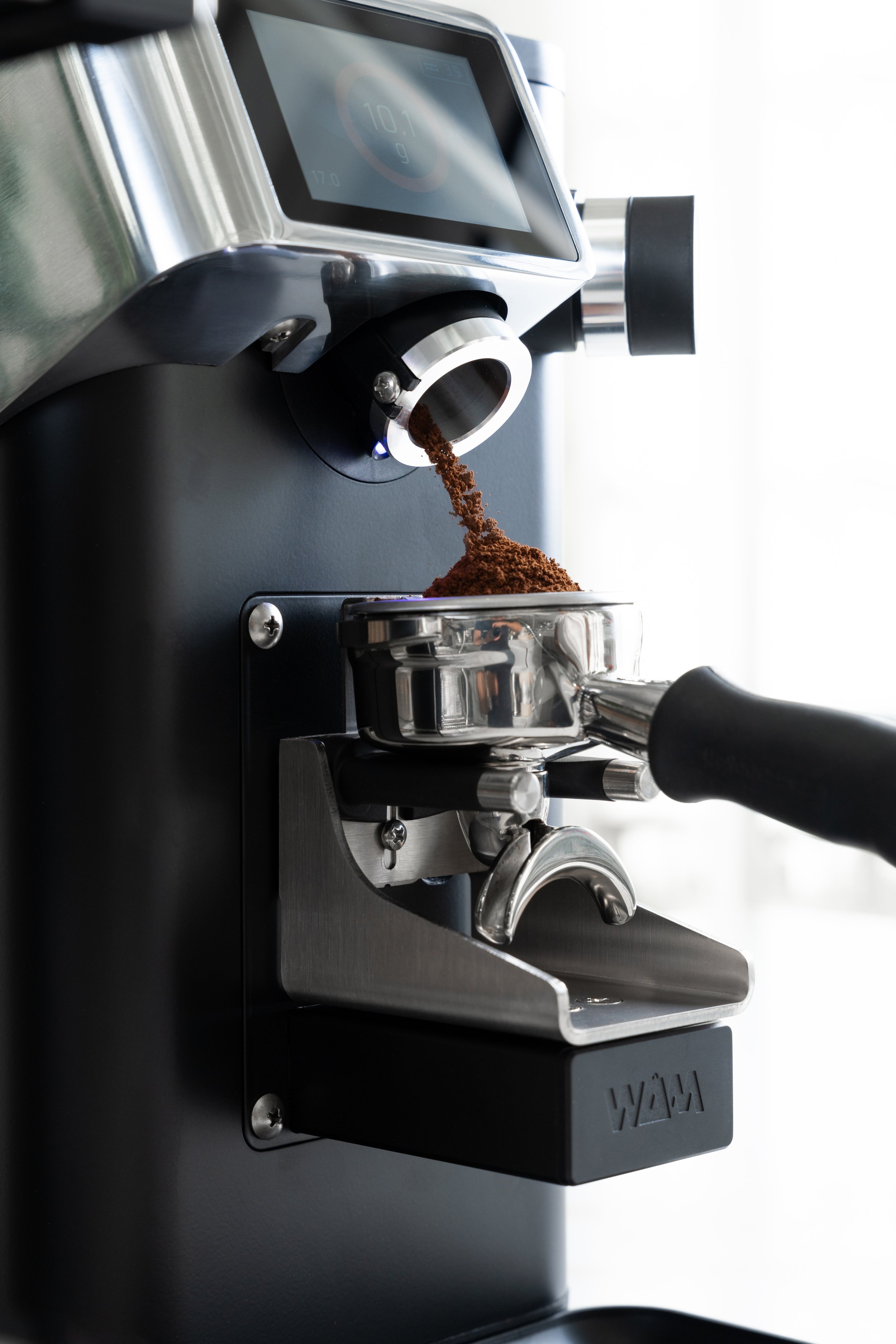
To address this issue, Ceado developed Sweep Out technology, which allows the REV Zero to deliver approximately 99% of retained coffee into the portafilter. The result is a grinding process with extremely low retention and significantly fresher coffee in every dose.
This has practical implications far beyond workflow cleanliness. Because fresh grounds retain more CO₂ and volatile compounds, baristas can achieve sweeter, clearer, and more expressive extractions while reducing the amount of coffee wasted during adjustments.
The REV Series also addresses burr stability through its Steady Lock system, which compensates for thermal expansion inside the grinding chamber. By counteracting heat-related movement, the system maintains a more stable burr distance and therefore a more consistent particle size distribution during continuous operation.
In parallel, the Weight Adjustment Module (WAM) introduces a modular gravimetric platform that allows operators to manage dose consistency with greater precision and flexibility.
Taken together, these technologies reflect a broader shift in grinder design: from passive grinding toward active control of extraction variables.
Reducing Waste Through Precision
Beyond flavor consistency, one of the most significant impacts of this approach may be sustainability.
Credit: Ceado
Coffee waste generated through grinder retention and repeated adjustment is often underestimated within café operations.
In a traditional workflow, baristas may need several doses before a grind adjustment fully stabilizes. Coffee already retained inside the chamber mixes with freshly ground coffee, delaying the effect of grind changes and increasing waste throughout the day.
By drastically reducing retention, REV Zero allows grind adjustments to take effect almost immediately. This reduces purge requirements while simultaneously increasing the proportion of freshly ground coffee in every shot.
The cumulative impact can be substantial.
A café using more than 4 kilograms of coffee per day may waste between 400 and 800 grams daily through dial-ins, purges, and grind adjustment routines alone. Even using the lower estimate, this represents approximately 120 kilograms of coffee wasted annually.
When multiplied across cafés worldwide, the environmental implications become impossible to ignore.
In practical terms, the yearly waste generated by just a small group of cafés can equal the annual production of an entire coffee farm.
Within specialty coffee, conversations around sustainability increasingly extend beyond sourcing alone. They also involve how efficiently coffee is used once it reaches the café. Precision, consistency, and waste reduction are becoming deeply interconnected topics.
In this context, grinder technology can play a meaningful role not only in cup quality, but also in resource responsibility.
Designing Flavor for the Future
The growing diversity of specialty coffee has fundamentally changed expectations around grinding.
Today’s coffees often showcase highly delicate and complex sensory profiles: florals, layered fruit characteristics, sparkling acidity, and refined sweetness. Preserving and expressing these qualities requires far greater control than traditional grinding systems were originally designed to provide.
This is where the philosophy of Designing Flavor becomes particularly relevant.
For Ceado, the grinder is no longer simply a support tool within the coffee workflow. It becomes an active instrument for shaping extraction, stabilizing flavor, and helping baristas and roasters express coffee with greater clarity and consistency.
The REV Series represents this shift toward a more intentional and controlled approach to grinding, one where flavor precision, operational efficiency, and sustainability are treated not as separate objectives, but as interconnected parts of the same system.
As specialty coffee continues to evolve, the role of the grinder may evolve with it: from one of the industry’s greatest sources of variability into one of its most important tools for consistency and flavor expression.
About Ceado
Founded in 1998 and headquartered near Venice, Italy, Ceado is a manufacturer of professional coffee and beverage equipment for the global specialty coffee and hospitality industries.
Driven by its philosophy of “Designing Flavor,” Ceado develops technologies focused on flavor consistency, workflow efficiency, and long-term reliability.

Through continuous research and in-house engineering, the company designs grinders and beverage equipment that actively support the control of key extraction variables and the optimal expression of coffee.
Today, Ceado works with distributors, roasters, cafés, and hospitality professionals in more than 70 countries worldwide.
Find Ceado at ceado.com or on Instagram @ceado, Facebook, LinkedIn, and YouTube.