Coffee, Carbon and Biodiversity: Rethinking Sustainability Initiatives for Shared Value | 25, Issue 25
Emily Pappo, Ph.D., a Postdoctoral Fellow with Smithsonian Bird Friendly Coffee & Cocoa, draws on a global meta-analysis to argue that while tree planting dominates current climate strategies in coffee, protecting existing biodiverse agroforestry systems should also be recognized as an effective climate and biodiversity solution. When incentivized, this approach can build shared value for producers and buyers.
Photo credits: Smithsonian Bird Friendly Coffee & Cocoa

Introduction by CHELSEA DUBAY, SCA Curriculum Director
When problem-solving in my role as Curriculum Development Director, I’m sometimes quick to reduce a line of inquiry down to two questions: What’s working? What’s not working? I like these questions for their simplicity—they invite candor and typically generate valuable insights from users that get to the heart of what to change and how to change. What’s working, and can we do more of that? What’s not working, and can we replace those elements with something more effective?
For all the strengths that come with this approach, it has a notable (and sometimes destructive) shortcoming—too much emphasis on “what’s working” can keep us in our comfort zones. When we draw from experience and repeat the moves that led to past wins across projects or contexts, we miss the opportunity to surpass familiar paradigms and visualize a better future. I sometimes have to remind myself that appreciative inquiry (the model of change management that inspired my desire to include “what’s working” alongside problem identification) extends beyond recognizing, celebrating, and valuing the best of “what is.” Equally important are the questions that prompt us to envision new possibilities: “What might be?” “What should be?”
Examining carbon sequestration initiatives, Emily Pappo’s article invites readers to consider the outcomes of new research, think beyond traditional success metrics, and imagine novel strategies that better account for the nuanced relationships among producers, the land they steward, and the fauna and flora that live alongside them. While it’s an obvious read for organizations planning their own sustainability projects, it’s an equally valuable case study for anyone seeking to think beyond what’s simply “working” and contribute to a more equitable, resilient coffee sector.
- CHELSEA DUBAY is the SCA Curriculum Director
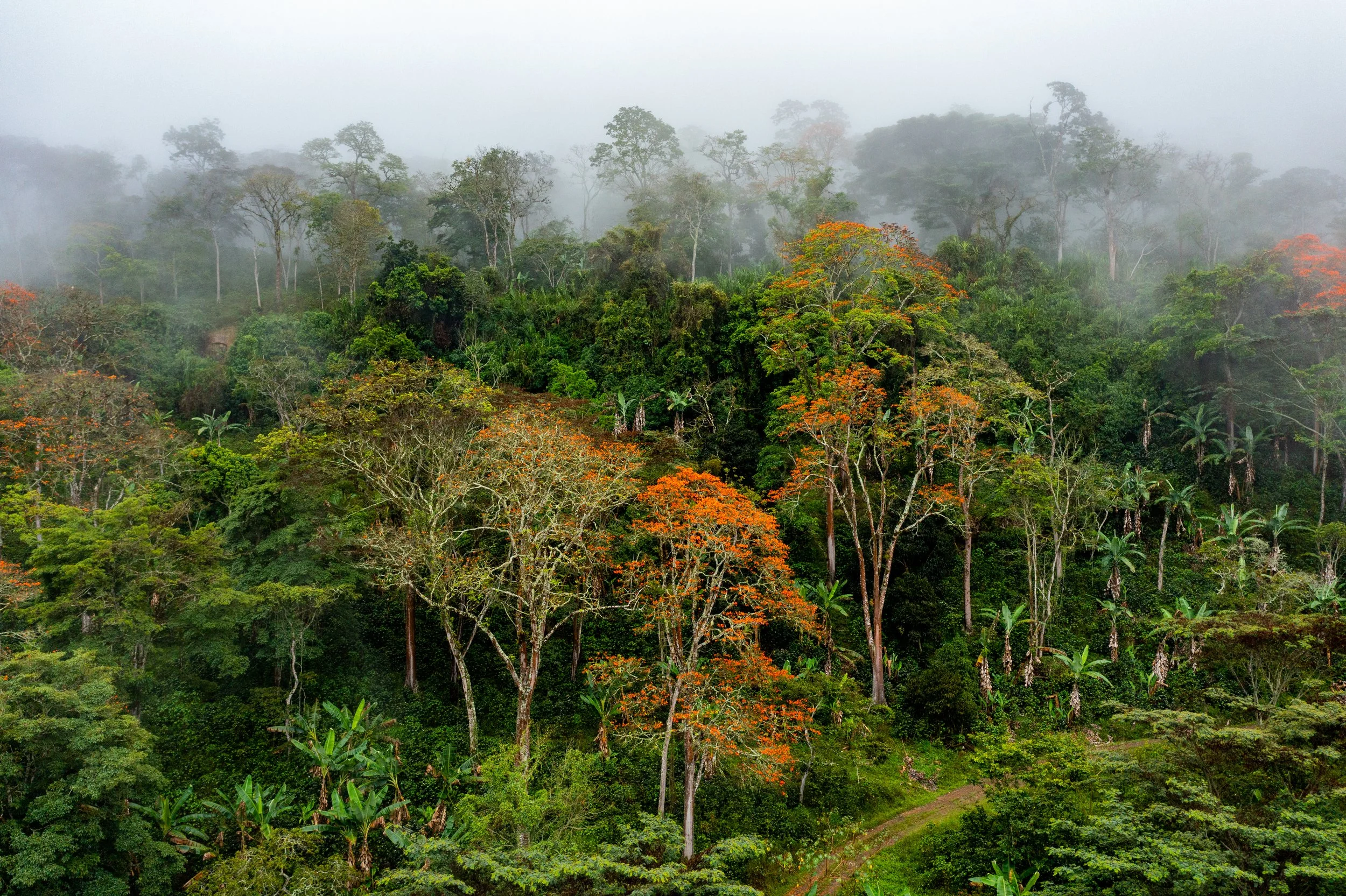
Working in coffee sustainability, I have lost count of how many times I have heard a version of the same question from coffee companies: "Where should we invest to reduce our carbon footprint?"
The conversation often turns quickly to tree-planting projects, or the number of seedlings distributed. These are tangible actions, and they reflect a genuine desire across the coffee sector to respond to climate change. At the same time, my work with the Smithsonian Bird Friendly program, which focuses on conserving biodiversity in coffee landscapes, has led me to question whether we as an industry are answering this challenge in ways that truly benefit the climate, producers, and the environment.
Carbon has, in many ways, become a central theme in coffee sustainability. Across the coffee industry, companies are investing in projects that reduce emissions, sequester carbon in their supply chain, and promote climate-friendly practices as part of their environmental commitments. These efforts are a valuable step toward reducing the industry’s environmental impact. However, as these programs continue to expand, it is worth evaluating their impact on broader environmental and socioeconomic needs. In other words, are carbon-focused projects in coffee maximizing carbon sequestration, and are they achieving meaningful co-benefits for producers and biodiversity? Without consideration of these questions, sustainability initiatives may miss, or fall short of, their intended impact.
To understand how we can better bridge the gap between aspirations and reality for carbon projects in coffee, I led the Smithsonian Bird Friendly research team through a global review (meta-analysis)[1] of existing research on carbon sequestration in coffee. As I’ll discuss in this feature, we found that the protection of existing, biodiversity-rich coffee agroforestry is a critical climate strategy, and that carbon programs must go beyond tree-planting initiatives and reflect the realities of on-farm decision-making. I’ll also share some insights and suggestions about how businesses throughout the coffee value chain can help to incentivize carbon-smart and biodiversity-friendly practices, creating shared value for their entire supply chain.
Background on Carbon Payment Programs in Coffee
To understand carbon initiatives in coffee, it helps to define what carbon actually is and why it is a central focus of sustainability work. Carbon is an element that is essential for all known forms of life. It cycles continuously between the atmosphere, vegetation, soils, and oceans, in a global process known as the carbon cycle (see figure 1). Plants, including coffee and shade trees, absorb carbon dioxide during photosynthesis and store it as biomass. When trees are cut down or plants are removed, that stored carbon in the biomass is released back into the carbon cycle and can ultimately reach the atmosphere as carbon dioxide, or CO2. Higher atmospheric CO2 traps more heat, driving climate change. So, carbon sequestration simply refers to the process of capturing and storing carbon in vegetation or soils for long periods of time, to prevent (or delay) its emission into the atmosphere.
Many companies now set emissions-reduction targets to reduce their climate impact. They may sign onto frameworks like the Science Based Targets initiative (SBTi) or follow national or international frameworks that require them to offset or reduce emissions. In coffee, this demand has created a growing market for carbon payment programs that operate within a company’s own supply chain—what’s known as “insetting” rather than offsetting. These programs typically require “additionality,” meaning the carbon sequestered by an intervention must be beyond, or additional, to what would have been sequestered without it.
This focus on additionality helps explain why one strategy has come to dominate carbon projects in coffee: planting shade trees into monoculture systems. New trees make additionality easy to demonstrate, which helps producers access carbon payments and increase on-farm revenue. Adding shade trees can also contribute to climate resilience through income generation, microclimate management, or other added value such as nitrogen fixation, depending on the tree species selected. However, although it’s the primary strategy for carbon projects in coffee supply chains, planting new shade trees is not the only pathway to carbon sequestration in coffee.
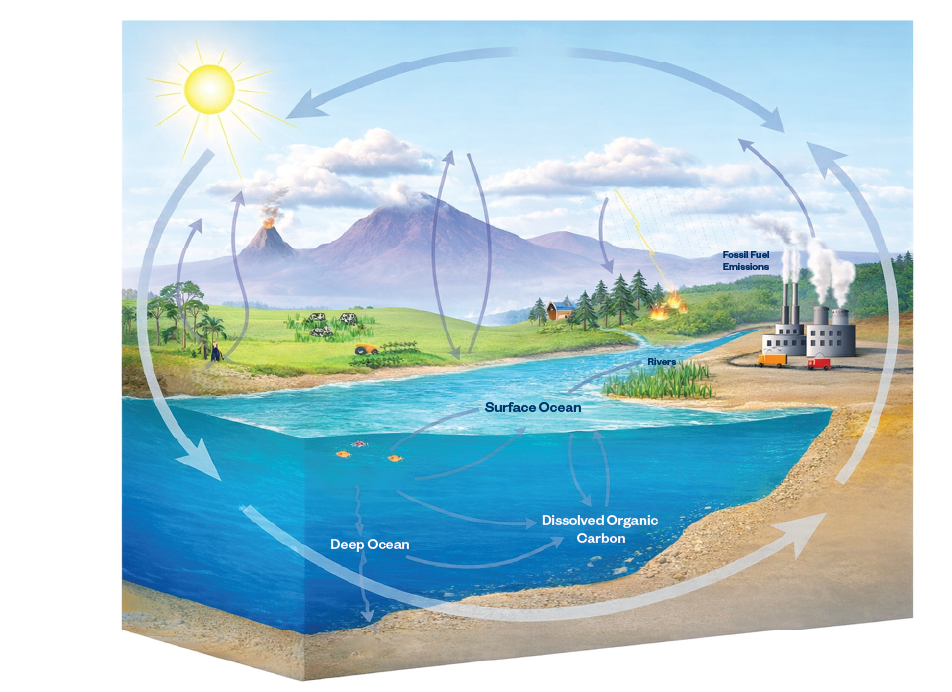
Figure 1.
Within the carbon cycle, plants, including coffee and shade trees, absorb carbon dioxide and store it as biomass. When trees are cut down or plants are removed, that stored carbon is released back into the carbon cycle and can reach the atmosphere as carbon dioxide. Image credit: National Oceanic and Atmospheric Association, https://www.noaa.gov/education/resource-collections/climate/carbon-cycle.
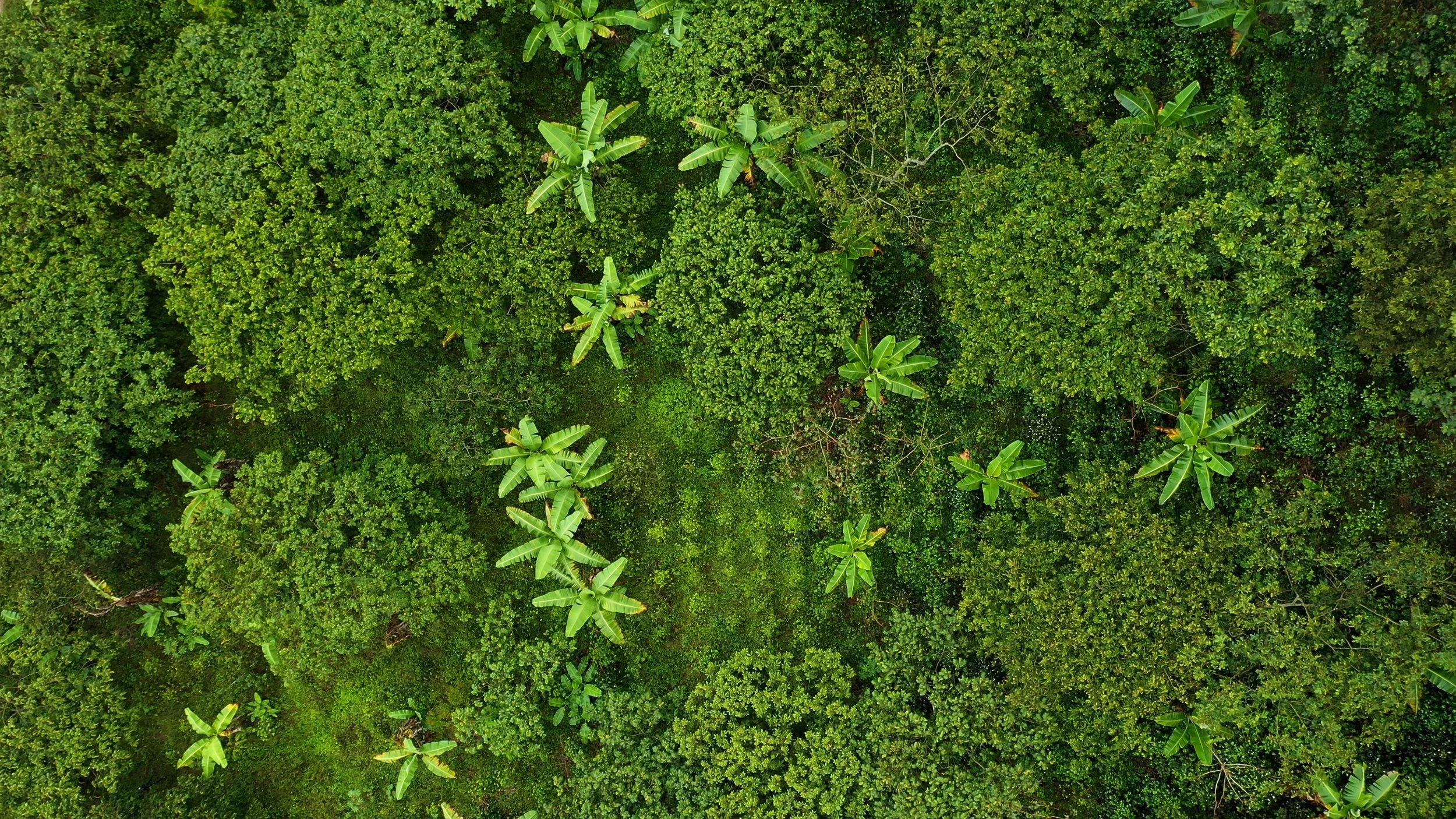
Global estimates suggest that only 24% of global coffee land area is currently managed under diverse agroforestry, while 25% is managed under scant shade and 41% under no shade.[2] Agroforestry systems, particularly when they contain a diverse suite of native tree species, provide high-quality habitat for associated biodiversity including birds, mammals, and insects. Biodiversity, in turn, provides services back to farmers. For example, some birds that live in coffee agroforestry systems control insect pests like the coffee berry borer, and maintaining diverse tree species can increase abundance of native pollinators that increase coffee fruit set (the phase when pollinated flowers begin to grow into fruit). However, since the 1970s, the trend across many growing regions has been to remove shade from coffee farms to increase yields or streamline management— although the pace and direction of change have varied across countries and regions. Existing coffee agroforests are at risk, and losing them means losing all the sustainability benefits they provide: carbon, biodiversity, climate resilience. With this in mind, it is important to consider whether the focus on tree planting as the primary carbon strategy in the coffee sector is truly the most effective for achieving carbon offset goals alongside other sustainability objectives for both producers and the environment.
What the Science Shows about Carbon in Coffee Landscapes
In 2024 and 2025, I led a team of Smithsonian Bird Friendly researchers and collaborators from eight international research institutions to publish a global meta-analysis[3] aiming to understand the gap between carbon payment strategies and sustainability outcomes in the coffee industry. We synthesized carbon data from coffee systems across a management gradient from monocultures in full sun to complex agroforestry systems. With this data, we were able to estimate how much carbon was held in different kinds of coffee systems. We also could compare, at a global scale, the carbon impact of planting new trees or removing mature trees on coffee farms. The results of this study showed that the greatest opportunity for climate change mitigation lies not in planting new trees (though this also has high potential for carbon sequestration) but in protecting the shade-grown agroforestry systems that already exist (see figure 2). Our results demonstrated that the loss of existing coffee agroforests could mean the emission of more than twice as much carbon as new plantings could sequester in the short term.
But here’s where it gets more complicated. You might assume that coffee systems with the highest carbon stocks and high biodiversity would naturally overlap—that the farms storing the most carbon would also be the ones with the most diverse canopies supporting birds, insects, and other wildlife. In other words, it might seem intuitive that carbon protection and biodiversity protection would necessarily be co-benefits in coffee landscapes, meaning that the focus on carbon sequestration as the central goal in sustainability projects would have an added, unintentional benefit of also supporting biodiversity. However, in our research we found that this isn’t automatic. Planting trees into coffee monocultures will increase carbon storage, but it won’t necessarily result in a biodiverse system. Biodiversity happens when diverse trees are planted.
This doesn’t mean that carbon and biodiversity are at odds—it means that biodiversity won’t happen as a passive side effect. To achieve both, biodiversity must be an explicitly planned objective. In practice, that means selecting shade tree species not only for how quickly they accumulate carbon, but also for the habitat value they provide. This approach requires more effort from the start but delivers more environmental benefits in the long run.
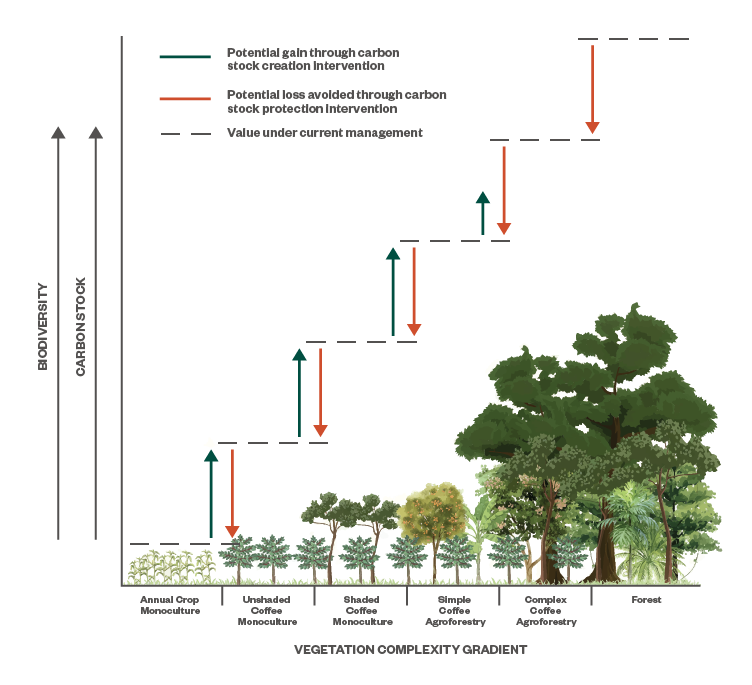
Figure 2. Conceptual representation of potential carbon gains and losses across the coffee management gradient. Blue arrows indicate potential carbon sequestered by adding shade trees to each system type. Red arrows indicate potential carbon losses from removing existing shade. The height of the horizontal dotted lines show the biodiversity and carbon stock value of each vegetation system, under current management. The depicted scale of carbon and biodiversity changes are illustrative, not hypothetical or data-driven. Credit: Emily Pappo et al., 2025.
Why Current Carbon Programs Struggle to Capture Farm Realities
Most carbon programs and supply-chain sustainability initiatives do not capture these complex realities. Their accounting structures often reward the easiest activities to measure, which may contribute to the focus on tree planting. Long-term maintenance of shade systems is rarely rewarded, even though agroforests hold immense climate and biodiversity value. Broadly, the problem is that carbon accounting frameworks are designed to document discrete activities that can be counted, standardized, and verified. Planting trees fits that model nicely, while protecting existing vegetation does not.
Agroforestry systems vary in ways that do not always align neatly with carbon tools. Shade levels shift from year to year. Tree species grow at different rates. Farmers prune or thin trees depending on market conditions, family needs, labor availability, or pest pressures. Also, farmers simplify shade for various economic and logistical reasons, such as the need for higher productivity when prices fall or labor is limited, or the shift to coffee varieties that prefer more light. So, a project that asks farmers to maintain complex shade without offering reliable, near-term incentives is unlikely to influence decisions. For many producers, maintaining shade is not only (or primarily) an environmental choice, but an economic and agronomic one. This is where the supply chain has room to evolve. If the market does not recognize or value the agroforestry systems that matter most for climate and biodiversity, those systems will continue to disappear.
How Extrinsic Attributes Can Bridge the Gap Between Practice and Market Value
One of the strengths of the SCA’s Coffee Value Assessment (CVA) is the recognition that coffee quality is shaped by both intrinsic (such as flavor or acidity) and extrinsic (information about the coffee) attributes. The CVA Extrinsic Assessment captures how coffee is grown, processed, sourced, or traded. They are the tools that help buyers understand the story and context behind a coffee, and they already shape sourcing decisions in meaningful ways.
For coffee buyers who value biodiversity and carbon-reduction, certifications are one path to ensuring they can find coffees that match their priorities. A certification is essentially an extrinsic attribute backed by a clear set of standards and verification rules. When a coffee carries an organic certification, for example, buyers know something real about farming practices—including which inputs, such as fertilizers, are used. Fairtrade and Fair Trade certifications demonstrate that certain labor standards have been followed and certain price premiums have been paid. Similarly, when a coffee is Bird Friendly certified, buyers know the farm has met research-backed standards: the farm conserves habitat either through diverse, native shade trees or forest conservation on the landscape, is certified organic, and is deforestation-free.
Beyond certifications, however, it’s worth noting that many of the key features that drive carbon storage and biodiversity, such as shade cover, tree diversity, and vegetation structure, are not obscure ecological details. They are observable, well-understood aspects of how coffee is grown. They show up in national extension guides, farmer trainings, agronomic recommendations, and conversations in the field. Most producers already track this information formally or informally because shade management affects production. This makes agroforestry features well suited to be tracked as extrinsic attributes, particularly when they are clearly defined or verified through existing mechanisms. Companies do not need an external or brand-new framework to value these characteristics; they can integrate them into their sourcing criteria or their own internal sustainability programs.For producers and cooperatives, one benefit of sharing their carbon sequestration approaches (certified or not) is to achieve visibility and differentiation in a crowded market. Many producers already manage their farms in ways that support carbon storage and biodiversity, but these practices are not always recognized or rewarded. When buyers articulate that these characteristics matter, and back that with pricing, contracts, or shared investments, producers have clearer incentives to maintain systems that are otherwise costly or risky to sustain.
Toward Shared Value in Carbon-Smart and Biodiversity-Friendly Coffee
The science is clear: protecting existing shade-grown systems is one of the most important climate actions available to the coffee sector. These same systems support biodiversity, help farms adapt to climate change, and reflect the long-term stewardship of producers whose decisions shape coffee landscapes. Yet without ways to make this value tangible in the market, whether through carbon payment programs or other incentives that reward carbon-smart and biodiversity-friendly management, agroforests will remain unprotected.
I am reminded of this challenge whenever I visit long-established coffee agroforests where tall, diverse shade trees tower above coffee plants, birds sing from the canopy, and producers reap the benefits these systems provide, from climate regulation to crop stability. On these farms, the value for climate and biodiversity is obvious on the ground, but it is often not reflected in how the coffee is valued or purchased. Bridging that disconnect is the opportunity ahead. When the carbon market and the coffee market can come together to support the shaded, biodiverse systems that already exist across coffee landscapes, it will become possible to protect the carbon and biodiversity they hold. More importantly, it will become possible to do so in a way that creates shared value for the people who grow coffee and the businesses that depend on it.
EMILY PAPPO, Ph.D., is a Postdoctoral Fellow with Smithsonian Bird Friendly Coffee & Cocoa. She earned her Ph.D. in Interdisciplinary Ecology and her M.Sc. in Agronomy from the University of Florida, where she led research evaluating the impact of climate change on coffee quality, yield, and profitability. Prior to her academic career, Dr. Pappo spent ten years in the coffee industry as a barista, roaster, and green buyer, which sparked her passion for understanding and enhancing climate resilience in coffee.
References
[1] Emily Pappo, Susan Cook-Patton, Damien Beillouin, et al., “Carbon Payment Strategies in Coffee Agroforests Shape Climate and Biodiversity Outcomes,” Commun Earth Environ 6: 661 (2025). https://doi.org/10.1038/s43247-025-02574-w.
[2] Shalene Jha et al., “Shade Coffee: Update on a Disappearing Refuge for Biodiversity,”BioScience 64 (2014), https:// doi.org/10.1093/biosci/biu038. Note that, while this paper was published over ten years ago, these figures are, to our knowledge the best estimates of global coffee land area under different management styles.
[3] Emily Pappo, Susan Cook-Patton, Damien Beillouin, et al. (2025).
We hope you are as excited as we are about the release of 25, Issue 25. This issue of 25 is made possible with the contributions of specialty coffee businesses who support the activities of the Specialty Coffee Association through its underwriting and sponsorship programs.Learn more about our underwriters here.