

Coffee Decoded: A Multi-Species World
Welcome to Coffee, Decoded, the Specialty Coffee Association’s weekly column on science, research, and all things coffee knowledge. Each week, PETER GIULIANO answers complex coffee questions, interprets new research, and dives deep into the science, putting it all in a fun, understandable format.
The topic of species is a charged one in coffee circles. To outsiders, this might be surprising: Why should biological taxonomy, of all things, be of importance to the people who grow, roast, and brew coffee?
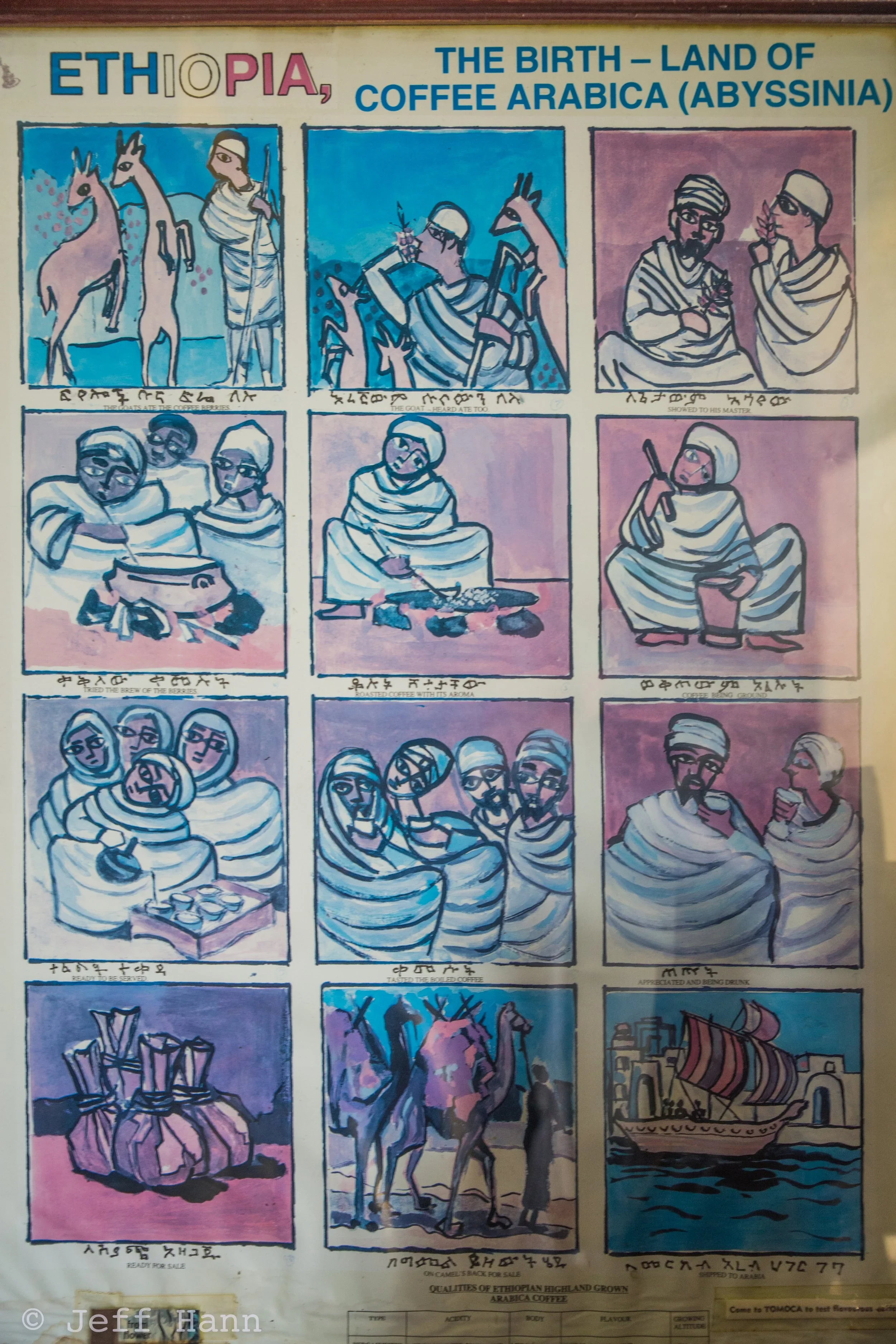
A poster about Coffea arabica’s discovery in Ethiopia (Abyssinia) and transfer to Yemen. Photo taken by Jeff Hann at Tomoca Coffee in Addis Ababa, Ethiopia.
It wasn’t always so. When coffee was first discovered, roasted, and brewed, there was only one “kind” of coffee, and it was associated with the country we now call Yemen. Though coffee was brought to Yemen from neighboring Ethiopia, the Yemeni were the first to commercialize the crop and sell it to outsiders. Hence, coffee was known as “The Wine of Arabia” due to Yemen’s position on the southern tip of the Arabian Peninsula. When Carl Linneus, inventor of our modern system of binomial botanical taxonomy, published his masterwork Species Plantarum in 1753, he included coffee in his list of plants. And he called it Coffea arabica. Coffee was Arabian, and was called arabica, and that was that.
This all changed during a single four-year period in the late 1800s.
In the early 1860s, African coffee-growers began to notice a rust-colored fungal growth on coffee plants, which could destroy a healthy coffee tree in a single year. The disease became known as “coffee leaf rust” and, tragically, the disease struck the island of Sri Lanka (then known as Ceylon) hard in 1867. That year, the entire Ceylon coffee crop was devastated, never to recover. Even worse, the disease began to appear in coffee plantations on the island of Java, the world’s largest coffee producer. It was the first ever global threat to the coffee industry, and it was serious. It looked like it might be the end.
Just in time, in 1870, a new kind of coffee was discovered in Congo. Coffee growers noticed a tree with a larger size and resilience than ordinary coffee and gave it the nickname “robusta.” And best of all, these new “robust” trees seemed immune to the terrifying coffee leaf rust. Soon, the coffee was brought to Amsterdam, and from there transported to Java and West Africa. Eventually, botanists realized that “robusta” was in fact a new species of coffee, giving it the official name Coffea canephora after the basketfuls of fruit on the tree (“canephora” is an ancient Greek word for “basket-bearer”). By 1895, coffee farmers were planting Coffea canephora (often still calling it “robusta”), particularly in places where coffee leaf rust had hit the hardest.
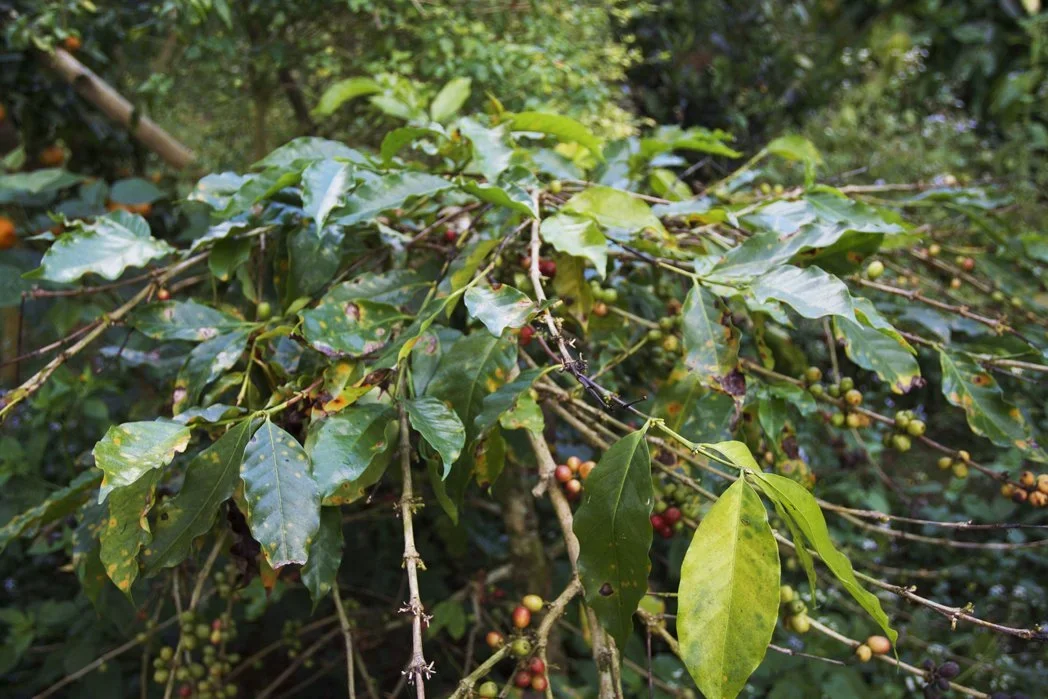
An arabica plant showing defoliation from coffee leaf rust. Photo by Michael C. Wright.
But it didn’t stop there. By 1922, coffee journalist William Ukers mentions several species of coffee in commercial production in Africa, including Coffea liberica from Liberia and Coffea stenophylla from Sierra Leone. He also mentions interspecific hybrids, which are produced when two coffees of different species cross. Though rare in the wild, these hybrids can sometimes combine beneficial attributes from each parent to produce a new plant that transcends species. One of these interspecific hybrids changed the coffee world: on the island of Timor in Southeast Asia, an arabica plant spontaneously hybridized with a canephora plant, creating the now famous “Timor Hybrid,” a part-robusta, part-arabica combo. This hybrid was recrossed with other coffees, providing rust-resistant genes to several of its descendants.
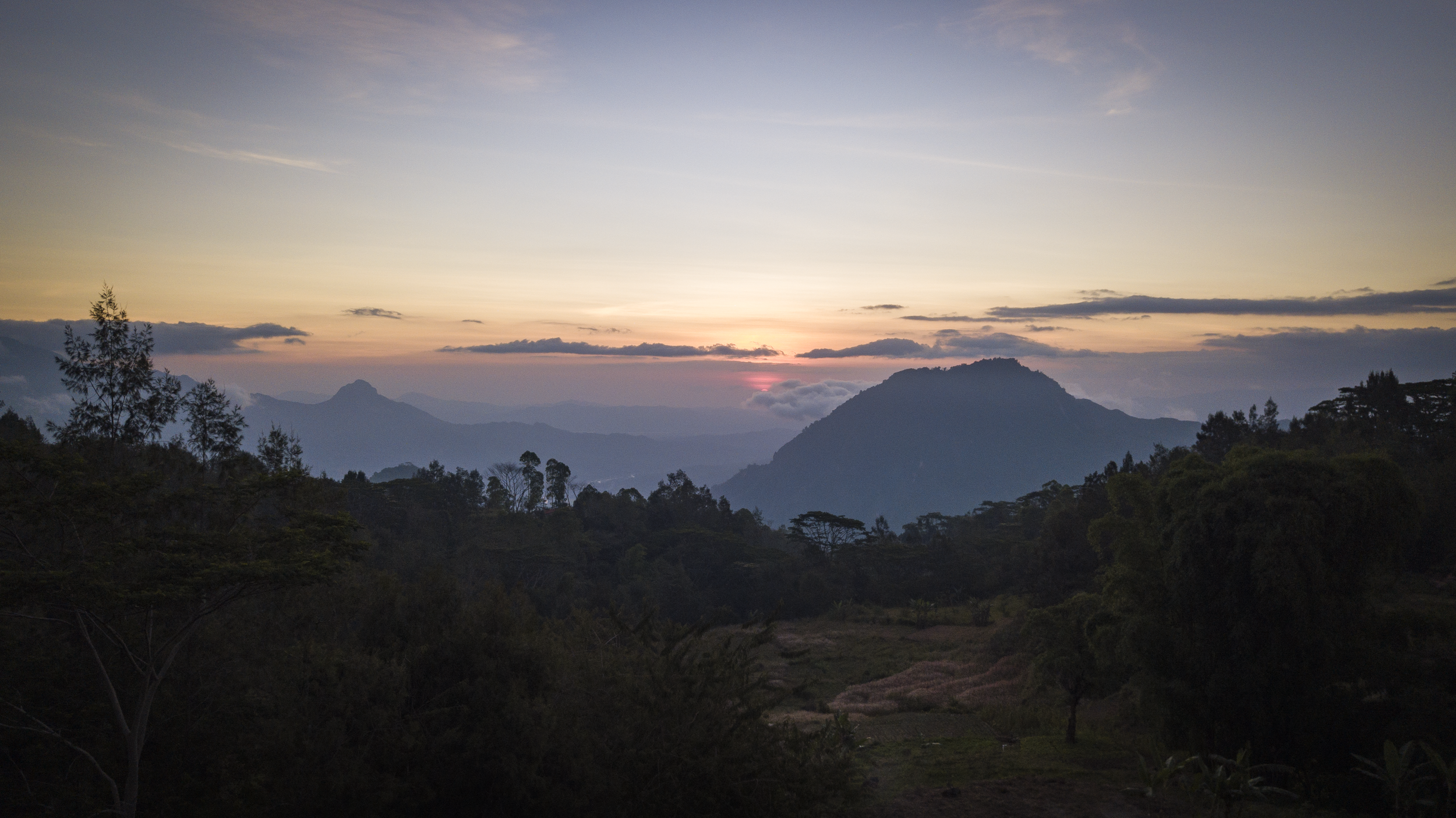
Coffee-growing areas in Timor Leste, on the island of Timor where the now-famous Timor Hybrid developed.
The point of all this is that the coffee industry has, for a long time, included several coffea species. This is very different from, say, the tomato industry: the entire universe of tomatoes, from tiny cherry tomatoes to big beefsteaks, to San Marzanos to Cherokee purples, are from a single species, Solanum lycoperiscum. Coffee isn’t like that—and it shouldn’t be. We’re more like the citrus industry: a vibrant, diverse agricultural industry based on many species and hybrids, with lots of variety. In citrus, we get to enjoy tangerines and lemons, grapefruits and blood oranges, pomelos and key limes. “Citrus” is a concept based on a genus, rather than species. And that’s like coffee: based on the coffea genus, encompassing multiple species and hybrids.
We’re more like the citrus industry: a vibrant, diverse agricultural industry based on many species and hybrids, with lots of variety. In citrus, we get to enjoy tangerines and lemons, grapefruits and blood oranges, pomelos and key limes. “Citrus” is a concept based on a genus, rather than species. And that’s like coffee: based on the coffea genus, encompassing multiple species and hybrids.
During the latter part of the 20th century, the specialty coffee world got very focused on a single species, Coffea arabica. As we’ve noted, arabica was the first coffee species to be described, and is still the most commonly-grown coffee species in the world. For a long time, other species like Coffea canephora were the object of derision and scorn, considered “lesser” than arabica. Recently, however, specialty minds have opened: coffee growers are rediscovering almost-forgotten species like liberica and stenophylla, bringing them to an eager specialty market. Coffee breeders are creating new hybrids and varieties, taking the best from multiple species and creating new, more sustainable, more delicious coffees.
In short, it seems that we’re entering a new era of multi-species enthusiasm, celebrating the botanical and sensory diversity that only species pluralism can bring.
- PETER GIULIANO is the SCA's Senior Advisor for Scientific Communication.
Want to learn more?
Read
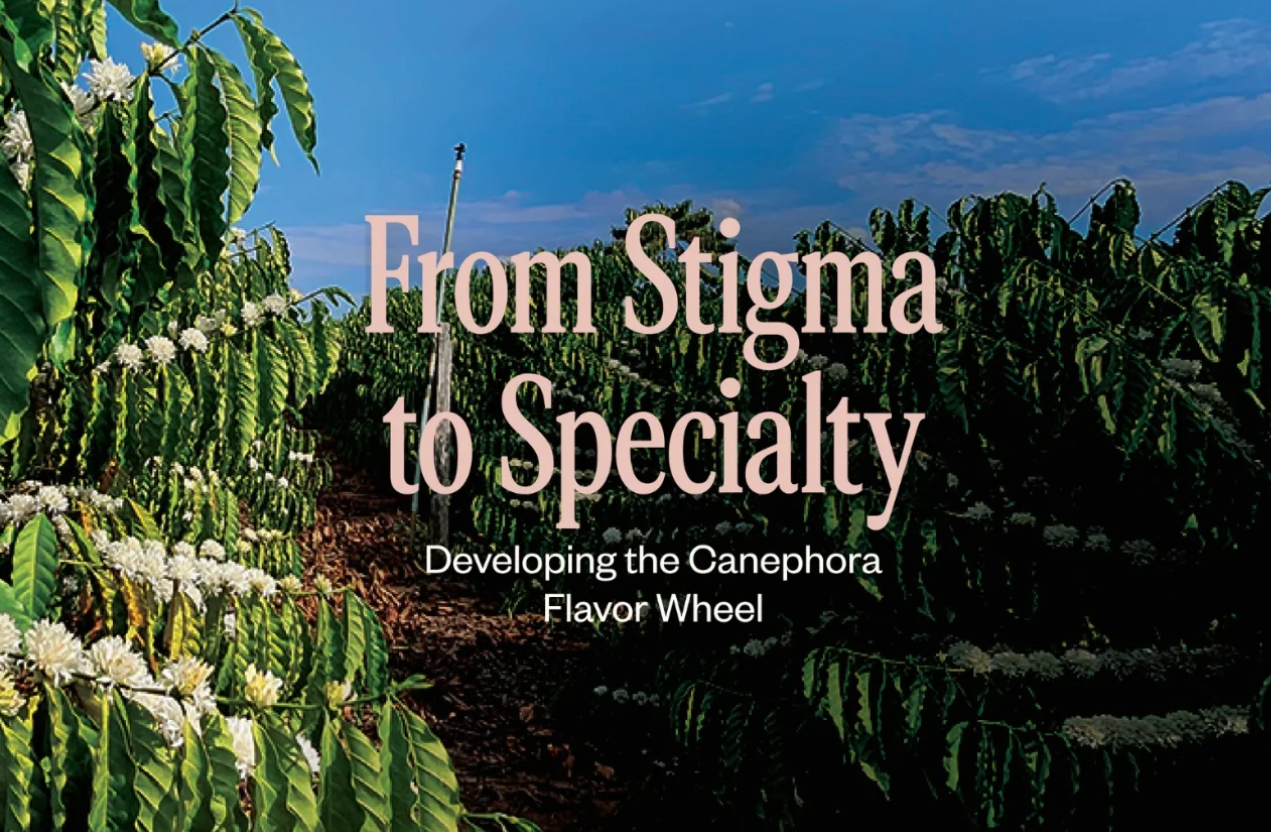
Fabiana Carvalho, From Stigma to Specialty: Developing the Canephora Flavor Wheel, 25, Issue 25, accessible via the SCA Member Portal, 2026.
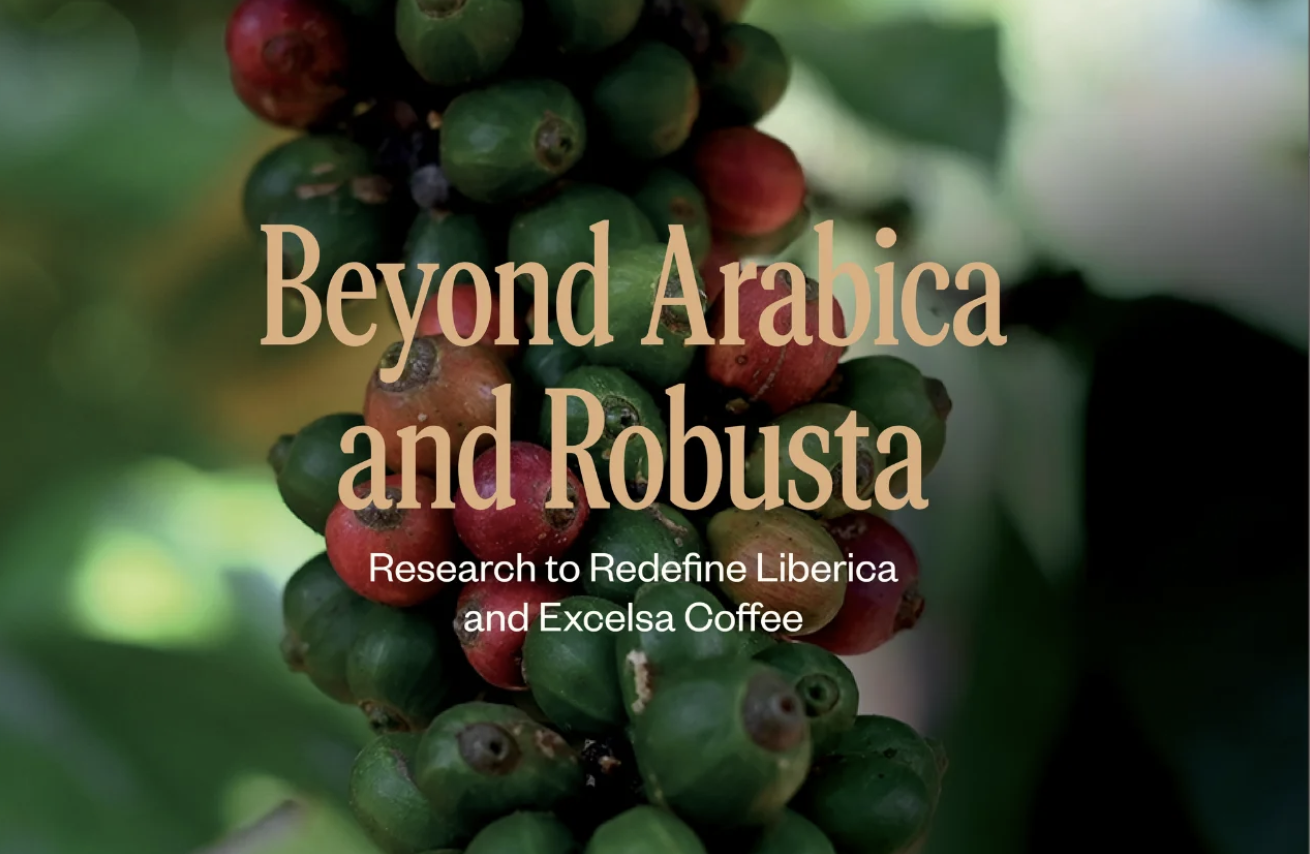
Aaron P. Davis, Beyond Arabica and Robusta: Research to Redefine Liberica and Excelsa Coffee, 25, Issue 25, accessible via the SCA Member Portal, 2026.
Maeve Holler and Dr. Robert Kawuki (World Coffee Research), The Roots of Robusta: Cultivating Growth for a Species Once Overlooked, 25, Issue 22, accessible via the SCA Member Portal, 2024.