

Coffee Decoded: What Is Shade Grown Coffee?
Welcome to Coffee, Decoded, the Specialty Coffee Association’s weekly column on science, research, and all things coffee knowledge. I’m PETER GIULIANO, and each week I answer coffee questions, interpret research, and dive deep into coffee science.
One of those coffee terms that comes up from time to time is “shade grown.” Many people—even within the coffee industry—are puzzled by this term. Don’t coffee plants naturally grow in the sun? Why would “shade grown” be a thing, and what does it even mean?
The confusion is understandable. “Shade grown” is used in two different ways in coffee, and of course there are shades of meaning (pun not intended) within these definitions. Today, we’ll explore the concept of growing coffee under shade, its benefits and drawbacks, and why it’s interesting.
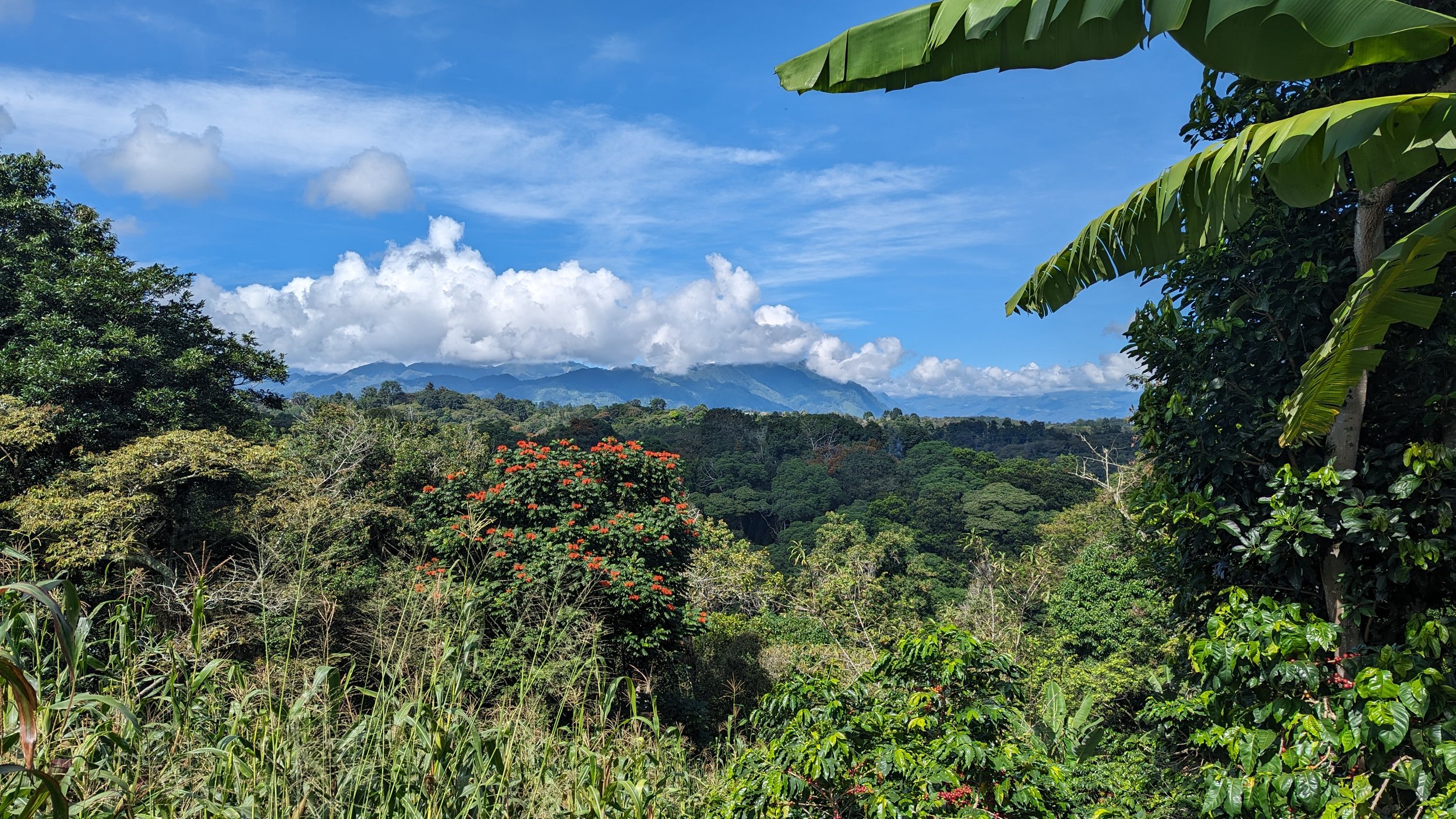
Outlook over coffee plantations within forest and shade trees in Veracruz, Mexico
Let’s begin at the beginning. Coffea arabica evolved in the forests of East Africa as an understory plant, meaning that it grows naturally beneath larger “canopy” trees in rainforests.[1] When humans moved coffee out of its evolved environment—into less-forested areas of Africa and Asia—the plant was generally able to survive without the protection of larger trees, and many geographies adopted the custom of growing coffee in full sun.[2] However, the plant remains well-adapted for growing underneath a canopy of trees, and farmers sometimes practice a technique where coffee is grown beneath larger trees, a practice that has come to be called “shade growing.”[3] It’s important to note: coffee is sometimes shaded by other means, such as agricultural shade cloth, but this isn’t usually called “shade growing.”
Farmers practice growing coffee under shade for several reasons, which we will explore below. But shade growing isn’t practiced everywhere. In some places persistent cloud cover make shade growing redundant, and in other places it’s just not part of the culture. But where it is practiced, it tends to signify two slightly different approaches.
The first is practical: I’ll call this “agricultural” shade growing. In this approach, shade trees are planted as a way to improve the farm’s quality, output, or general condition. In this scenario, trees are generally planted intentionally to perform specific functions. Trees may protect coffee plants from both wind and sun, and they may be a species that can naturally “fix” nitrogen in the soil.[4] And, importantly, shade growing can be an effective way to conserve soil moisture, stabilize crop output, and reduce the overall temperature of a coffee farm, a particularly important consideration in view of climate change.[5] Finally, many farmers and coffee buyers associate shade growing with increases in cup quality, though evidence is limited on this point, and appears to vary according to specific microclimate, cultivar, and management practice.
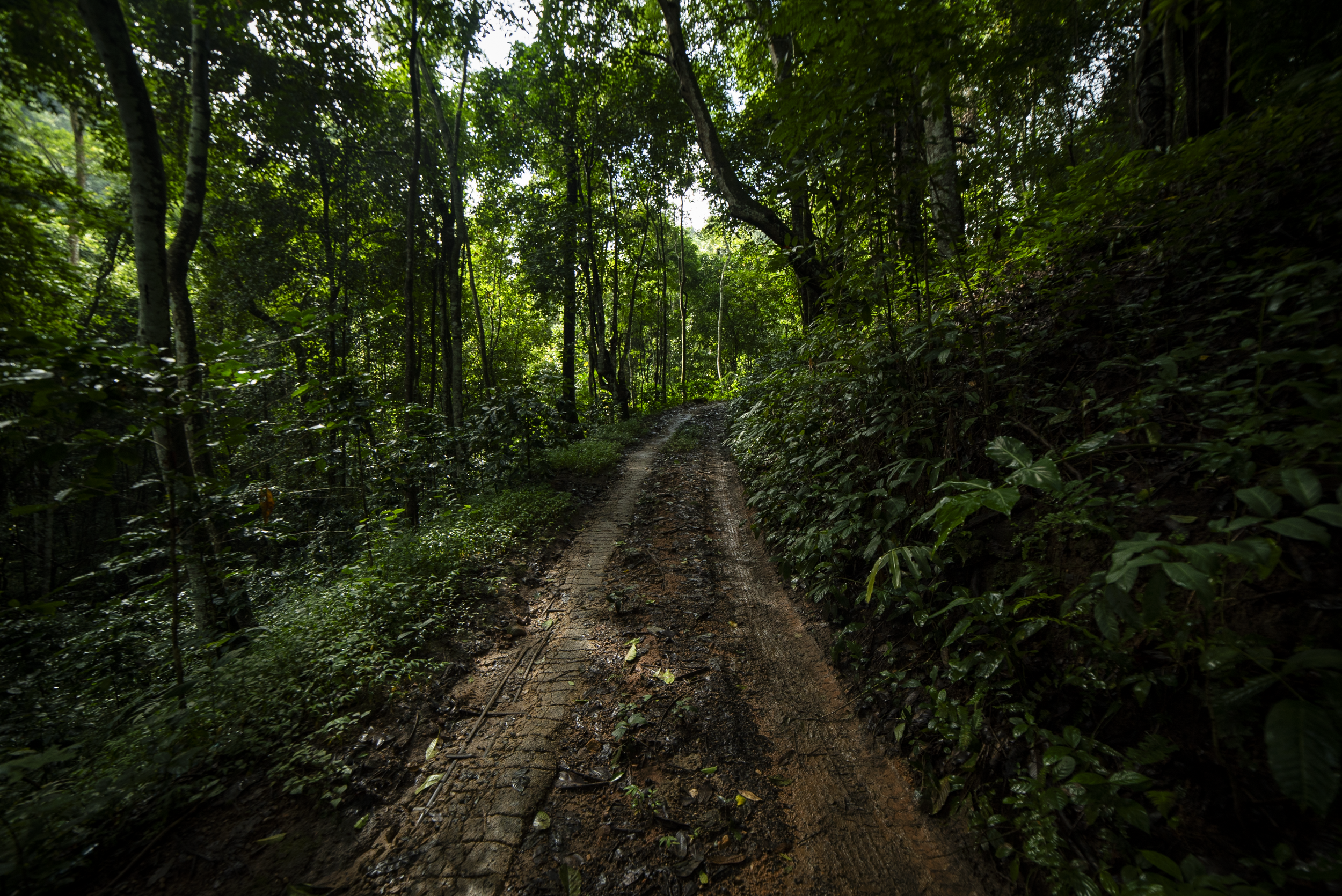
Road through coffee plantations amidst dense forest in Thailand.
The second type of shade growing I’ll call “ecological.” This is a type of shade growing where coffee is planted among pre-existing or native trees, in a farming system that can get very close to a completely natural forest. Farmers sometimes choose this system for practical reasons—it can be expensive and difficult to clear a forest for a coffee farm, and coffee can be grown without touching the biggest trees. In the 1980s, an ornithologist from the Smithsonian Institution in the United States noticed a correlation between these types of shaded coffee farms and high populations of birds—the birds would treat these “ecological” coffee farms almost as if they were untouched forest.[6] Since then, the Smithsonian Migratory Bird Center, along with other wildlife and environmental researchers, have found that these kinds of shade farms offer ecological benefits to wildlife, soil, microbes, and watersheds.[7]
One drawback of shade growing is that yields are often lower on a shade farm than a full-sun one, particularly in certain microclimates, and sun-grown farms are certainly appropriate in many circumstances. But shade-growing is a compelling practice, and offers many benefits where it’s used.
Have a question or topic you want explored in Coffee Decoded? Email editor@sca.coffee
References
[1] Smithsonian Tropical Research Institute, “Rainforests: Understory,” https://striresearch.si.edu/rainforest/home/understory/
[2] Fábio M DaMatta, “Ecophysiological constraints on the production of shaded and unshaded coffee: a review,” Field Crops Research, Volume 86, Issues 2–3, 2004, https://doi.org/10.1016/j.fcr.2003.09.001.
[3] DaMatta, 2004.
[4] J.M. Grossman, C. Sheaffer, D. Wyse, B. Bucciarelli, C. Vance, P.H. Graham, “An assessment of nodulation and nitrogen fixation in inoculated Inga oerstediana, a nitrogen-fixing tree shading organically grown coffee in Chiapas, Mexico,” Soil Biology and Biochemistry, Volume 38, Issue 4, 2006, https://doi.org/10.1016/j.soilbio.2005.07.009.
[5] Fábio M. DaMatta, Rodrigo T. Avila, Amanda A. Cardoso, Samuel C. V. Martins, José C. Ramalho; “Physiological and Agronomic Performance of the Coffee Crop in the Context of Climate Change and Global Warming: A Review.” J. Agric. Food Chem. 30 May 2018; 66 (21), https://doi.org/10.1021/acs.jafc.7b04537.
[6] Lonnie G. Bunch III, “For a Quarter of a Century, We’ve Helped Make It Possible to Protect Birds Over a Cup of Coffee,” Smithsonian Magazine, 2025, https://www.smithsonianmag.com/blogs/office-of-the-secretary-of-the-smithsonian/2025/11/20/quarter-century-weve-made-possible-protect-birds-over-cup-coffee/.
[7] Jha, S., Bacon, C.M., Philpott, S.M., Rice, R.A., Méndez, V.E., Läderach, P. (2011). A Review of Ecosystem Services, Farmer Livelihoods, and Value Chains in Shade Coffee Agroecosystems. In: Campbell, W., Lopez Ortiz, S. (eds) Integrating Agriculture, Conservation and Ecotourism: Examples from the Field. Issues in Agroecology – Present Status and Future Prospectus, vol 1. 2011.
Learn More

READ. Emily Pappo from the Smithsonian Bird Friendly Coffee & Cocoa institute investigates climate strategies in coffee, with a focus on preserving existing forest systems.
To read, create a free account or login to the SCA Portal.