

Welcome to Coffee, Decoded, the Specialty Coffee Association’s weekly column on science, research, and all things coffee knowledge. I’m PETER GIULIANO, and each week I answer coffee questions, interpret research, and dive deep into coffee science.
Coffee with foamy milk (also known as microfoam)—whether it is a classic cappuccino, a cold brew with cold foam, or a creamy latte—is a cornerstone of specialty coffee cuisine (see figure 1). Well-foamed milk is considered an indispensable part of great coffee to millions of people, and milk-foaming is a skill practiced proudly by the best baristas in the world.
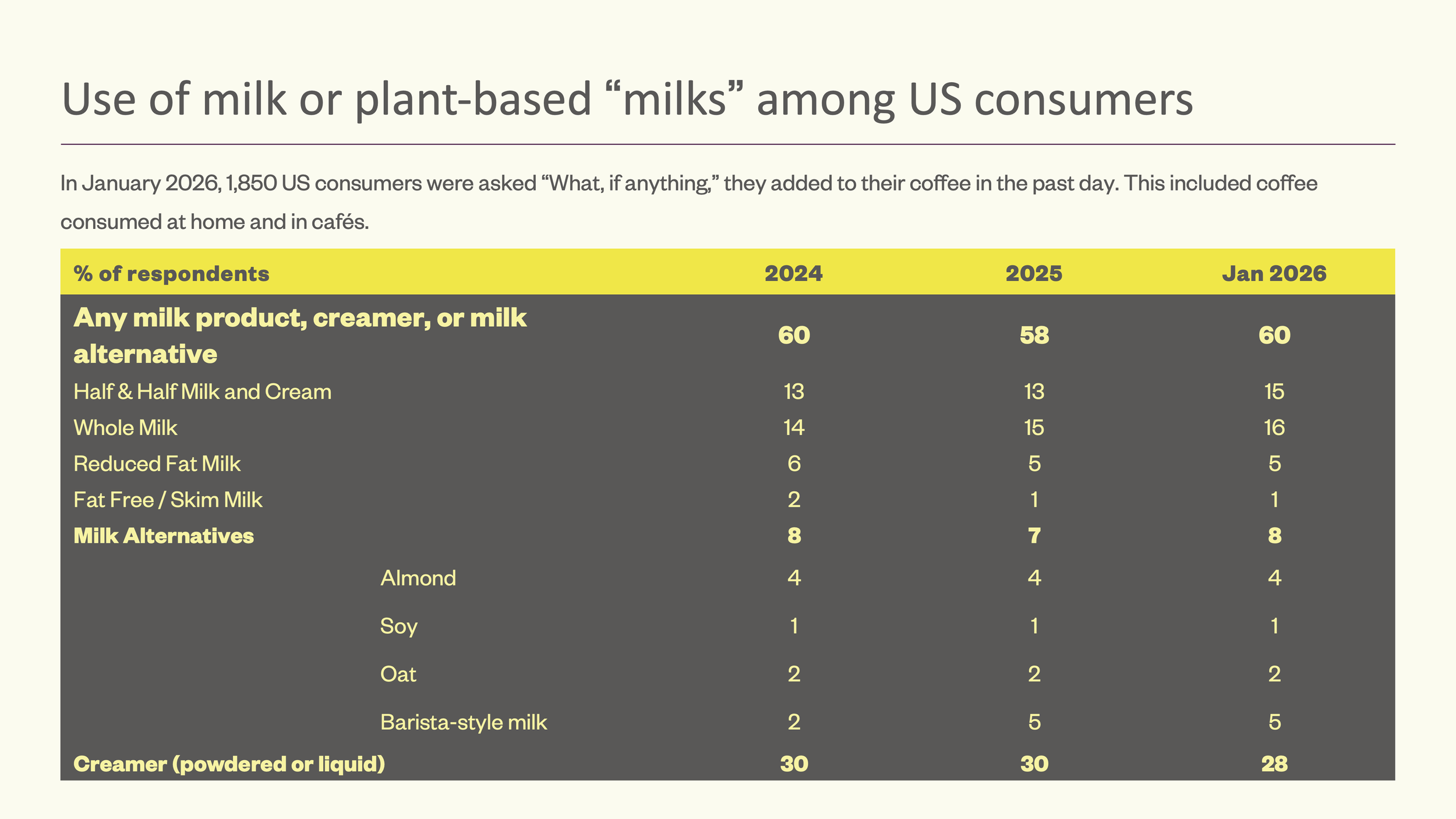
Figure 1. Data on past-day consumption of milk, plant-based milk alternatives, and creamers taken from the National Coffee Association’s National Coffee Data Trends Specialty Coffee Breakout Report, released in collaboration with the SCA.
But why, exactly, does milk foam so well, and so easily? And why are those foams so delicious? Let’s get into it.
I once knew a chemist who told me: “When you see a foam in a beverage, you know that proteins are involved.” That’s absolutely true for milky coffee. Milk contains two important groups of proteins: casein and whey. Casein is the one most responsible for the foaming property of milk.[1] Luckily, caseins are temperature-stable and very abundant in milk—about 80% of milk’s protein comes from caseins.[2] This is more than enough casein to make an abundant foam.
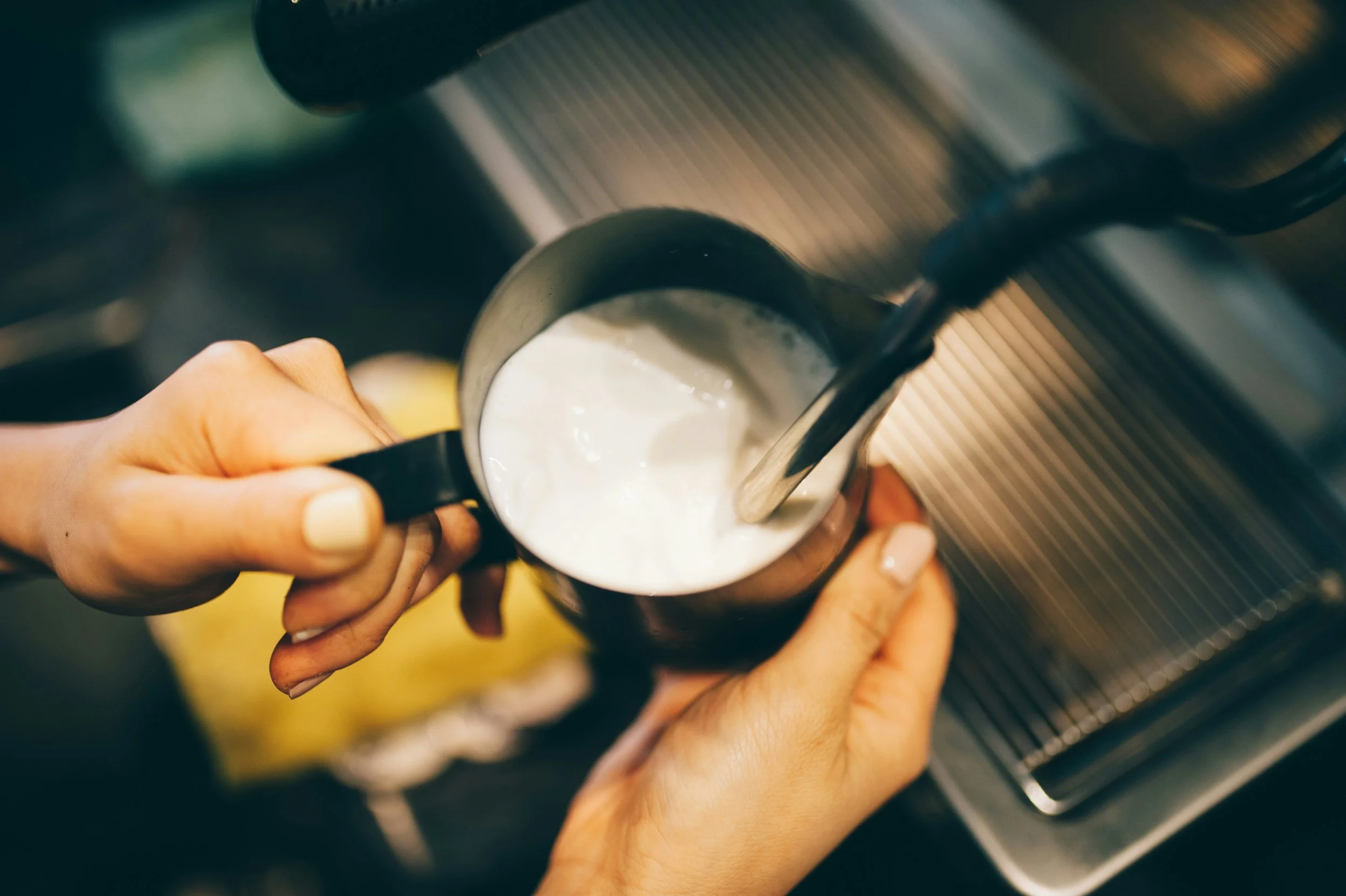
Milk or soapy water? Many baristas practice steaming milk with dishwashing detergent and water, because the liquids respond in a similar way.
Caseins do two things to help make milk foamy. First, they reduce the surface tension of the water, allowing bubbles to form (just like dish soap does in water). Second, as the proteins are jostled and heated by the jet of steam from the espresso machine, they unravel, transforming from a molecular knot to a stringy shape, which tangles with other protein molecules. These form a kind of net around the air bubble, making the foam stable. Job done, right? Not so fast.
Milk contains other things besides proteins, namely fats. These “butterfats,” as they are called, are delicious and make up a huge part of milk’s flavor. There are two problems with fats in milk. Number one, in non-homogenized milk, the lighter butterfat floats to the top, making a creamy layer. This must be mixed back into the milk to make it rich and delicious. The second problem is that foams hate fats. A drop of fat can wreck a foam’s structure, which is why a drop of egg yolk can ruin whipped egg whites. In steamed milk, the fats are constantly working against foam stability, which is one reason why nonfat milk foams are so much stiffer than whole milk foams.[3] Fortunately, there is a technique that helps: homogenization reduces the size of fat globules in the milk to such a degree they can’t clump together, meaning they don’t float to the top, and their ability to interfere with proteins is greatly reduced. Research shows that homogenization techniques that create the smallest milkfat globules creates creamier, sweeter, more stable foams.[4]
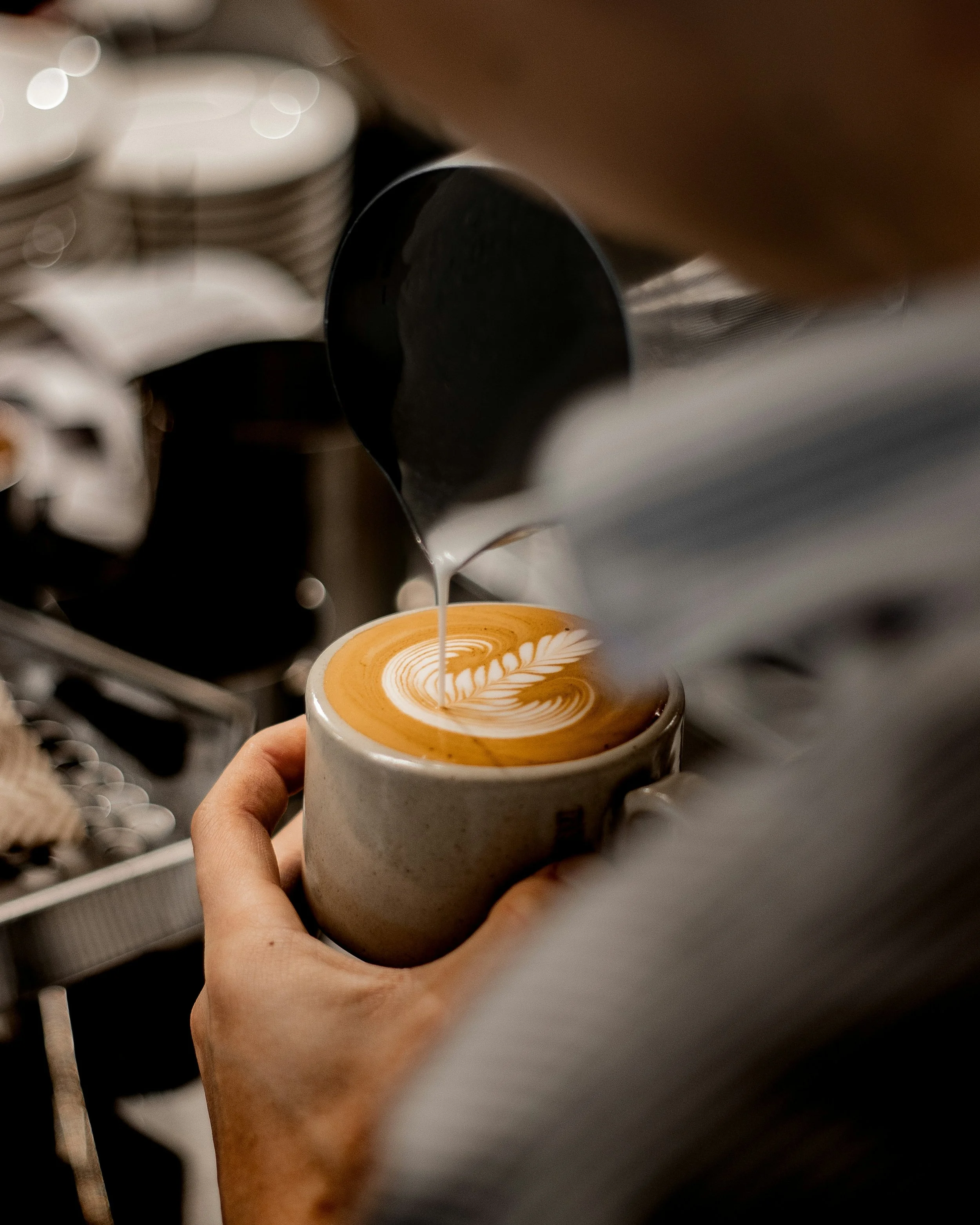
Protein content, fat content, and milkfat globule size are all variables that can be controlled by the milk processor at the dairy. These variables can be optimized for making the best, finest, and silkiest milk foams. In fact, some dairy companies market special “barista milks” with precisely controlled protein levels and homogenization techniques.
Milks with the right components, in the hands of a talented barista with a powerful steam wand, can create an unctuous, rich, sweet, luxurious microfoam that elevates the flavor of both the milk and the coffee. It’s a beautiful transformation, and it’s become a cornerstone of the specialty coffee experience.
Have a question or topic you want explored in Coffee Decoded? Email editor@sca.coffee
References
[1] Shinichiro Hatakeyama, Masayuki Akiyama, Rina Yoneyama, Kanae Watanabe, Reiko Koizumi, Kazuhiro Miyaji, Yasumichi Mizota, Michio Ikeda, Shoji Wakao, “Effects of manufacturing conditions on the foaming properties of milk and sensory characteristics of foamed milk,” LWT, 2019, https://doi.org/10.1016/j.lwt.2018.09.082.
[2] Yulia Klimanova, Valeria Polzonetti, Stefania Pucciarelli, Diego Romano Perinelli, Giulia Bonacucina, Marco Cespi, Maria Gabriella Gabrielli, Giuseppe Santini, Lauro Fioretti, Luca Cognigni, Silvia Vincenzetti,
“Effect of steam frothing on milk microfoam: Chemical composition, texture, stability and organoleptic properties,” International Dairy Journal, Volume 135, 2022, https://doi.org/10.1016/j.idairyj.2022.105476.
[3] T. Huppertz, “Foaming properties of milk: A review of the influence of composition and processing,” International Journal of Dairy Technology, 2010, https://doi.org/10.1111/j.1471-0307.2010.00629.x.
[4] Shinichiro Hatakeyama, et al., 2019
Learn More



The National Coffee Association and SCA publish an annual Specialty Coffee Breakout Report about US coffee consumption trends, including patterns in milk consumption. Access the 2026 report free here.
PhD student Ana Luiza Santana Neves shares her research about how Brazilian consumers pair coffee drinks (with and without milk) with food. She dives into the drivers behind food pairings beyond flavor, including regional and cultural habits and personal rituals.
Create a free Associate Membership to read the article on the SCA Portal.
WATCH.
Watch presentations from the 2026 World Barista Championships. All competitors must present milk-based drinks and are judged on taste, technical skill, creativity, and presentation. This is a great way to see how the world’s best baristas are leveraging the latest science on milk products and milk preparation.
TAKE A LOOK back at some historic Art Bar pours from the World Latte Art Championships.