

Coffee Decoded: Why is Coffee Crema So Important?
Welcome to Coffee, Decoded, the Specialty Coffee Association’s weekly column on science, research, and all things coffee knowledge. Each week, PETER GIULIANO answers complex coffee questions, interprets new research, and dives deep into the science, putting it all in a fun, understandable format.
For most of coffee’s history, the brew was made according to the process we now think of as “Arabic,” “Ethiopian,” “Turkish,” cezve, or ibrik-style brewing, in which powdered coffee is mixed with water and boiled in an open pot. When prepared this way, coffee produces a foam that is considered an essential hallmark of the style: a golden, persistent, rich layer of bubbles atop a deliciously hot coffee.
As European inventors attempted to mechanize coffee brewing in the 20th century, their methods produced foamy coffees too. The first low-pressure espresso machines produced foam similar to open-pot brewing. However, in the 1940s, Achille Gaggia invented a high-pressure espresso machine that produced a coffee made of almost pure foam, which sat thickly on top of the liquid coffee. Gaggia called this crema caffé—"coffee cream”—drawing a comparison between this coffee and thick, rich cream. The name stuck: today we refer to the foam on top of an espresso as “crema,” and we consider it an essential element of espresso.
Why do we care so much about foam? In Turkey, it is considered essential to spoon a bit of foam into every cup, so each person gets a bit of it. In espresso culture, crema is analyzed and appreciated, its color evaluated, and its texture enjoyed. But why?
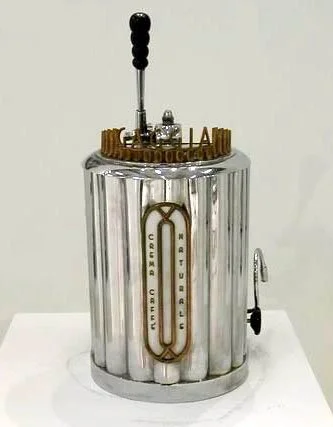
Classica Gaggia espresso machine, 1948. Source: Wikipedia.
Coffee scientists have researched the issue, and have come up with several interesting ways that crema—AKA coffee foam—is crucially important to the experience of espresso.
First, expectation. One study shows[1] that consumers identify persistent, thick crema with quality coffee. Seeing a delicious-looking crema atop a coffee therefore increases consumer expectation of both quality and “smoothness,” which in turn lead to increased perceptions of quality. Simply seeing a lovely foam atop a coffee creates a positive impression of the coffee, which carries over into the experience of drinking it.
Second, crema-like foams appear to have an influence on coffee’s aroma. Interestingly, aroma—the way an espresso smells when you sniff the cup—is actually increased when crema is present.[2] This was a surprise to researchers, who assumed crema would “trap” aromas in the bubbles. In fact, the initial breakdown of the foam when the espresso is still fresh seems to drive extra aromatics into the atmosphere above the cup, where the drinker can easily perceive them.
Finally, in the mouth, coffee crema is perceived in several ways. The same study referenced above showed that the existence of crema increased consumers’ perception of “roasty” flavors and, when crema wasn’t present, the coffee tasted more “carbony” and bitter. Another study showed[3] that the sensation of “smoothness” was increased with the presence of crema- presumably because of crema’s distinct texture.
Coffee foams are complicated and fleeting; it’s still unclear what factors make crema persistent or fast-disappearing in a coffee. It’s also not yet known exactly how crema actually changes flavors in the mouth. But what’s certain is that crema is crucially important in espresso’s perception.
- PETER GIULIANO is the SCA's Senior Advisor for Scientific Communication.
References
[1] D. Labbe, J. Sudre, V. Dugas, and B. Folmer, “Impact of crema on expected and actual espresso coffee experience,” Food Research International, Volume 82, 2016
[2] D. Barron, N. Pineau, W. Matthey-Doret, S. Ali, J. Sudre, JC. Germain, E. Kolodziejczyk, P. Pollien, D. Labbe, C. Jarisch, V. Dugas, C. Hartmann, B. Folmer, “Impact of crema on the aroma release and the in-mouth sensory perception of espresso coffee,” Food Funct. 2012
[3] D. Labbe, J. Sudre, V. Dugas, B. Folmer, “Impact of crema on expected and actual espresso coffee experience.”
Want to learn more?
Watch
World Barista Championship Finals, 2025. Watch world-class baristas prepare espresso, discuss their recipes, and the sensory attributes of the beverage.
Read
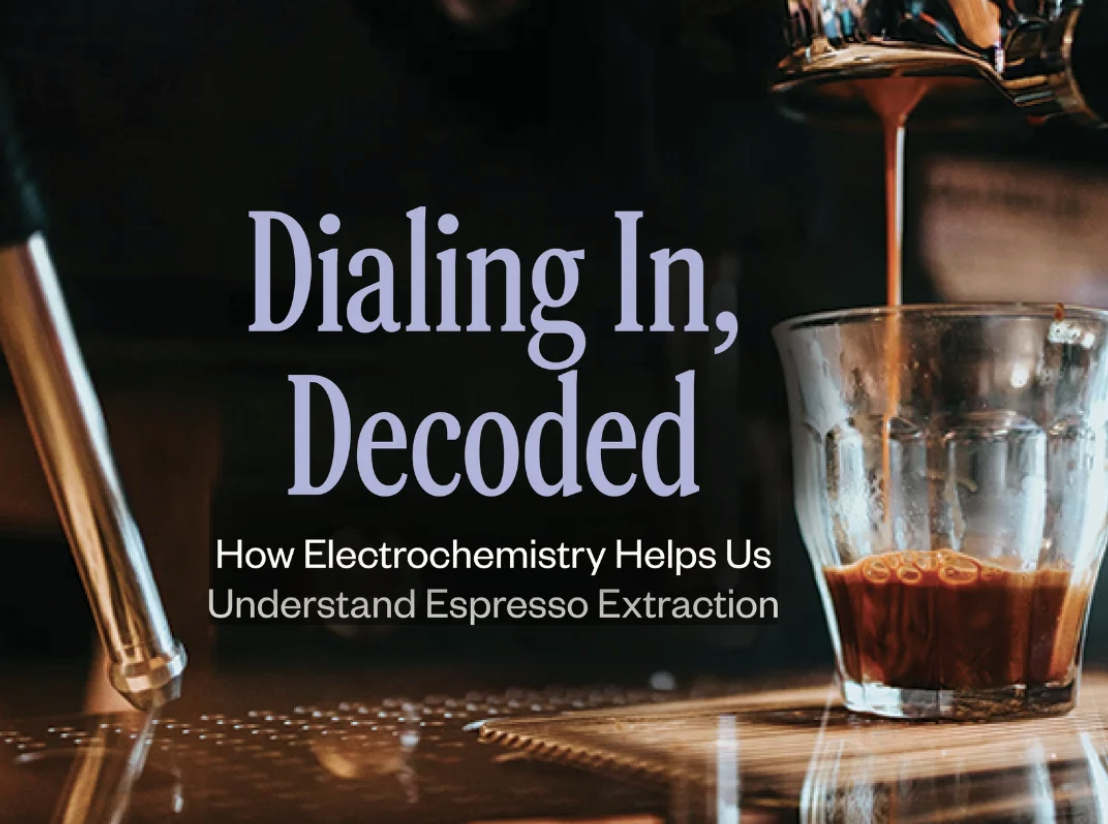
Dialling-In, Decoded. Read about Coffee Science Foundation research conducted by the Hendon Coffee Lab at the University of Oregon. The article shares how the research team are using chemistry and electricity (!) to help us understand espresso extraction. Sign up or login to the SCA Member Portal with a free associate member account to read.
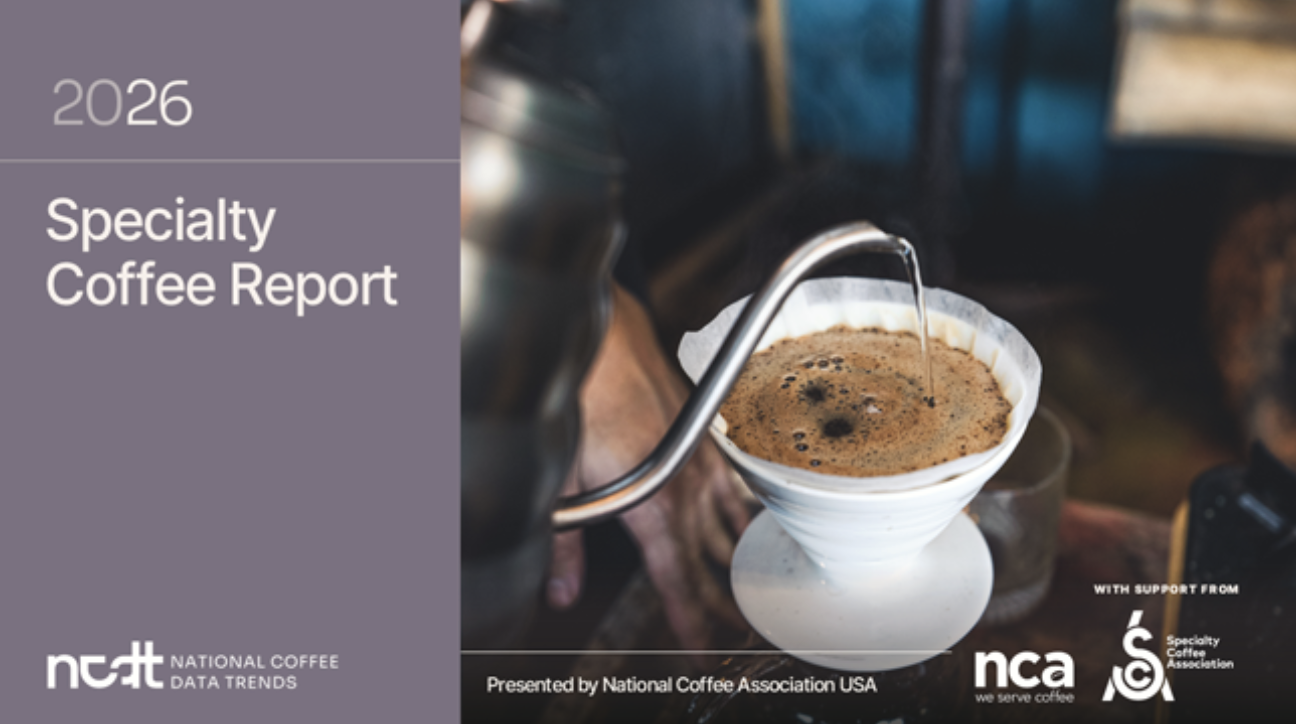
National Coffee Data Trends, Specialty Coffee Breakout Report. Read the annual report from the National Coffee Association in partnership with the SCA. The report tracks coffee consumption trends in the US, including espresso consumption.