

Coffee Decoded: Is Tasting Coffee Good for Your Brain?
Welcome to Coffee, Decoded, the Specialty Coffee Association’s weekly column on science, research, and all things coffee knowledge. Each week, PETER GIULIANO answers complex coffee questions, interprets new research, and dives deep into the science, putting it all in a fun, understandable format.
When the COVID-19 pandemic hit in 2020, it led to a huge number of world-changing things. An unanticipated effect had to do with our knowledge of flavor. Since about 40% of patients who contracted COVID experienced loss of taste or smell,[1] and because sometimes this dysfunction was long-term, it led to a tremendous amount of research into how our senses of taste and smell work—or don’t.
One particularly interesting field of research has to do with anosmia, the technical term for loss of smell. Sufferers from anosmia either partially or completely lose their ability to perceive and identify aromas, which leads to a loss of flavor perception as well (aroma is half of the experience of flavor). Anosmics frequently experience depression, weight loss, and feelings of isolation as a result of losing one of their main senses. Researchers, aiming to understand and treat anosmia, set about to more deeply understand the dynamics of aromatic perception.
Aroma is unique among our senses in that smells—perceived in the nasal cavity by olfactory nerves—are transmitted directly to the brain via the olfactory bulb and tract. Unlike all other senses, olfactory information bypasses the thalamus before being processed by the parts of the brain responsible for emotion and memory.[2]
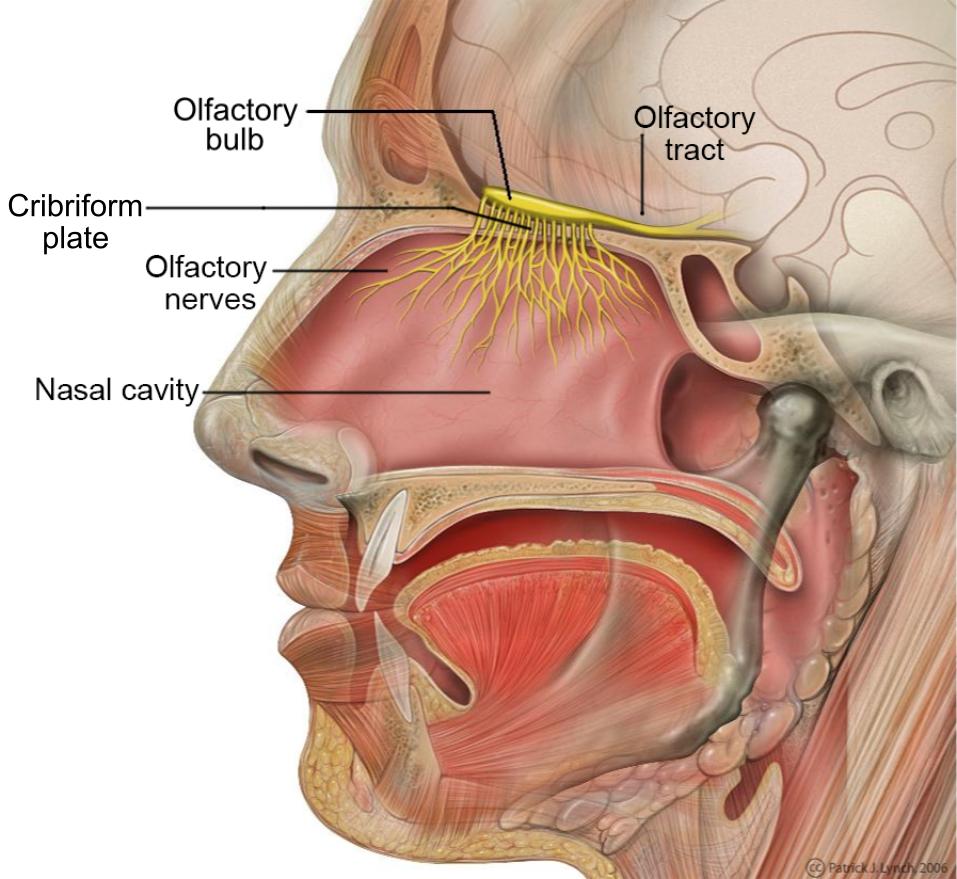
The olfactory system. Image credit: Patrick J. Lynch, medical illustrator, via Wikipedia.
Most neural pathways like this are pretty fixed. However, the olfactory pathway—the specialized nerves that bring stimuli from the nose to the brain—can transform, develop, and heal, a property scientists call plasticity. In basic terms, simply using your sense of smell makes it work better.
“…simply using your sense of smell makes it work better.”
This was a critical insight during the COVID-related anosmia outbreak. Physicians learned that patients with smell loss could dramatically improve their chances of recovery, and recover faster, by engaging in simple smell training, the intentional, regular practice of experiencing aromas and fragrances.[3]
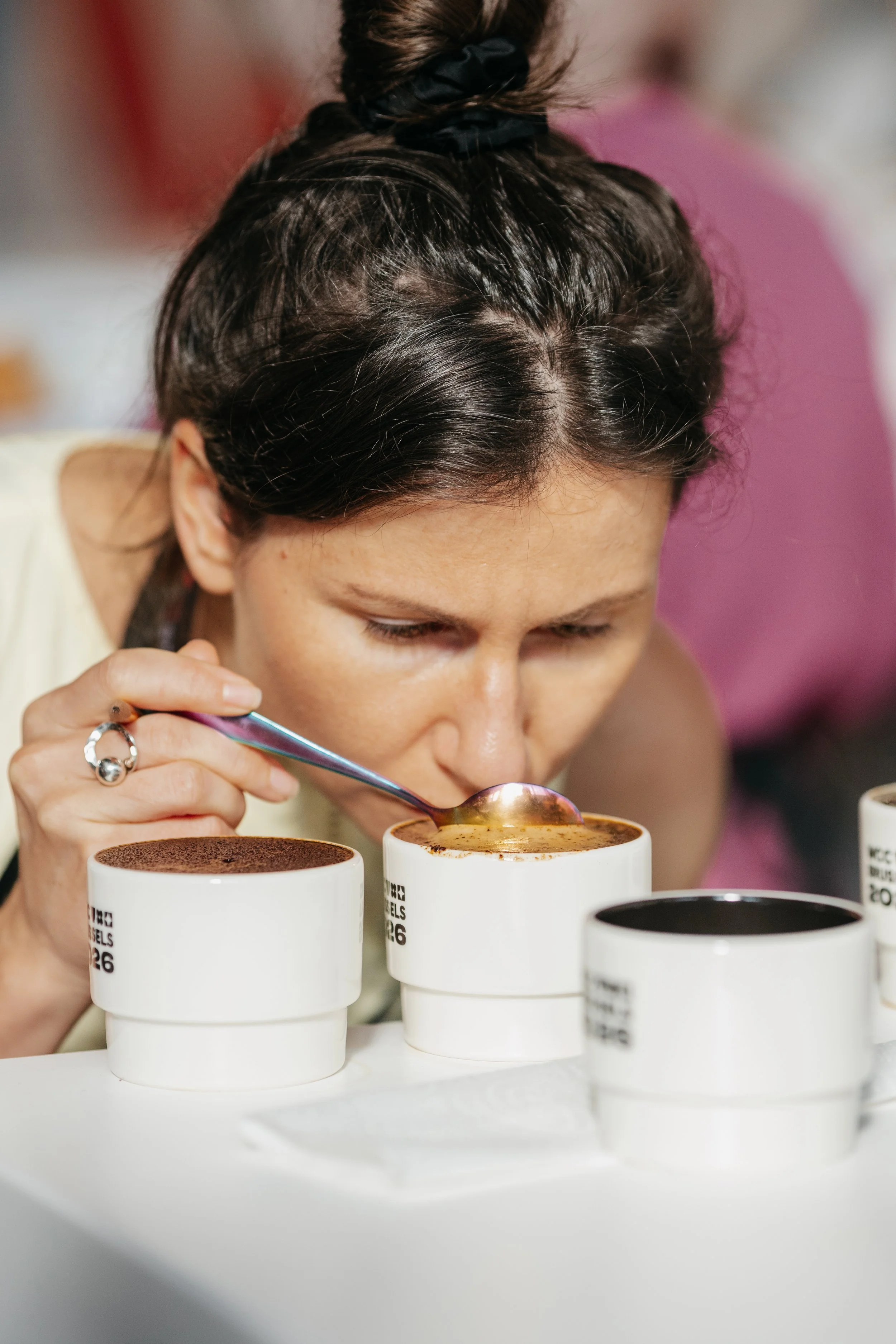
Breaking the “crust” of a cupping bowl is a great time to smell volatile aromas.
Though this was a groundbreaking realization in the world of anosmia treatment, it was something we coffee tasters have known for a long time. The regular practice of consciously smelling things—which coffee cuppers do on a daily basis—significantly improves one’s ability to perceive, recall, and describe aromas. Although many people think of tasting ability as a talent you either have or don’t have, the truth is that it is more like muscular development: the more you work it, the stronger it gets. The trick seems to be conscious olfaction; that is, paying attention to the things you are smelling. And what doctors call smell training or olfactive therapy, we call cupping or training.
So, clearly, regular, rigorous coffee tasting improves the parts of your brain related to olfaction and flavor perception. But there is an additional, unexpected extra benefit. In several studies, researchers noticed that people who engaged in smell training experienced other cognitive benefits as well; from greater verbal fluency to improved well-being to better memory. Olfactory training—simply smelling things in an attentive way—improved many parts of the brain. In a systematic review of 18 studies, researchers found that smell training to a variety of neurological benefits. In the words of the researchers, “…studies on cognition and neuroimaging provided converging evidence that olfactory training improved brain function as exhibited by improved cognitive performance, increased volumes in several brain regions, and increased neural connectivity/efficiency.”[4]
Though none of these studies (yet!) focused specifically on coffee tasting, the effect seems to work regardless of the smells in question. So, the conclusion is clear: regular, intentional, systematic coffee tasting not only improves your ability to smell, it also can change your brain, making you smarter, quicker, and happier.
- PETER GIULIANO is the SCA's Senior Advisor for Scientific Communication.
References
[1] AA Agyeman, et al. “Smell and Taste Dysfunction in Patients With COVID-19: A Systematic Review and Meta-analysis.” Mayo Clin Proc. 2020, doi: 10.1016/j.mayocp.2020.05.030.
[2] https://www.ncbi.nlm.nih.gov/books/NBK10982/
[3] A.H. Delgado‑Lima, et al. “The efficacy of olfactory training in improving olfactory function: a meta-analysis.” Eur Arch Otorhinolaryngol 281, 5267–5284 (2024). https://doi.org/10.1007/s00405-024-08733-7
[4] DE Vance, et al. “Does Olfactory Training Improve Brain Function and Cognition? A Systematic Review,” Neuropsychol Rev. 2024 Mar;34(1):155-191. doi: 10.1007/s11065-022-09573-0.
Want to learn more?
Read
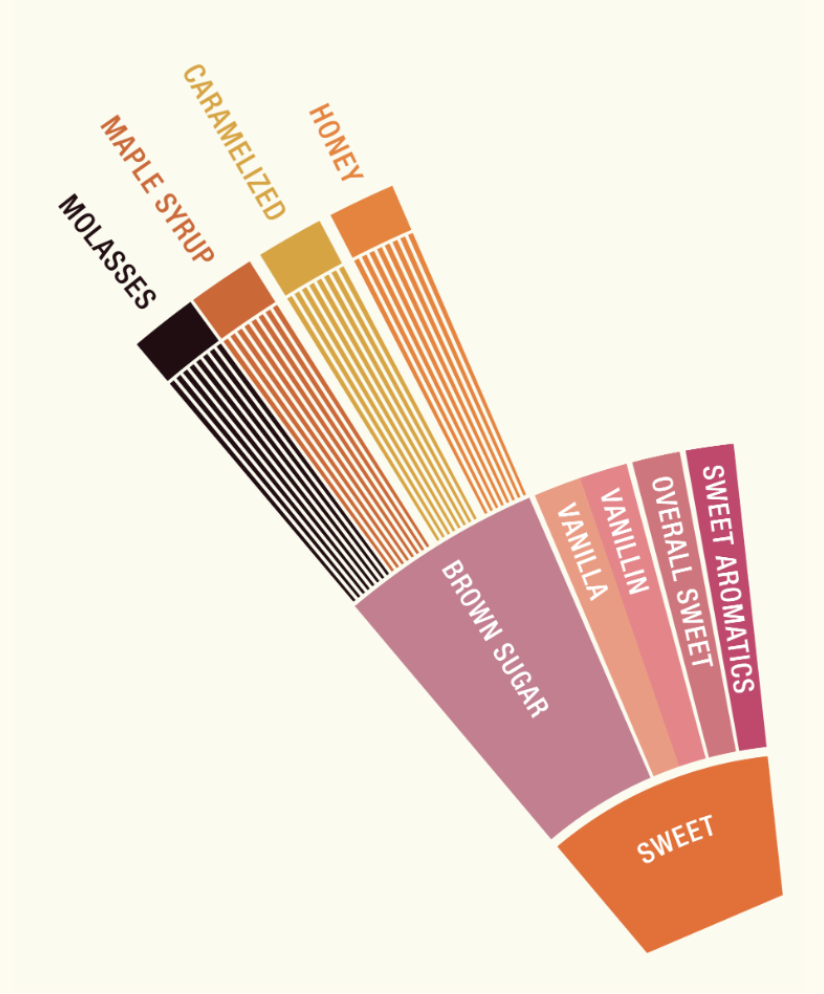
Coffee Decoded: Can We Smell Sweetness?
Dive into questions that many cuppers ask: can we smell sweetness? What causes the phenomenon of sweetness in coffee, and how has research from the Coffee Science Foundation and University of Ohio helped us understand more?