

Coffee Decoded: What’s the Difference Between Coffee Body and Mouthfeel?
Welcome to Coffee, Decoded, the Specialty Coffee Association’s weekly column on science, research, and all things coffee knowledge. I’m PETER GIULIANO, and each week I answer coffee questions, interpret research, and dive deep into coffee science.
When we drink a cup of coffee, we say we “taste” it. But the truth is much more complex. Indeed, we sense the coffee’s chemistry using gustatory receptors on our tongues, which we call our sense of taste. But that’s not all, not by a long shot. We also smell the coffee—before, during, and after we taste the coffee. This olfactory experience—perceived in our nasal cavity—is part of the experience of flavor.
However, we’re still not done. There are a lot of nerve endings in the mouth, on the tongue, and on the lips that are designed to sense texture, temperature, and viscosity. These nerves feel foods and beverages rather than taste or smell them, and it’s that feeling—that sensation of touch—that we call “mouthfeel.” [1]
From a scientific perspective, the study of mouthfeel is more recent than the study of taste and smell. Though studies of food texture began in the early twentieth century, mouthfeel wasn’t entirely separated from the experience of flavor until the 1950s.[2] And it’s still much less understood than taste or smell—it’s even difficult for us to define.

Judges at the World Coffee Roasting Champs assess competitor coffees for mouthfeel.
But that’s not to say it’s unimportant. Mouthfeel is critical in the experience of many foods: the crunchiness of a potato chip is important to its enjoyment, the creamy texture of ice cream is a fundamental element of its character, and the drying sensation of a strong cup of tea is a unique and essential part of the experience.
But what about coffee? Early coffee tasters identified mouthfeel as an important part of the coffee experience, although they did not use the sensory term as such. Instead, they borrowed a term that had come to mean “substance” in the seventeeth century: that term was “body.” Originally meaning the trunk of a tree or the torso of a human,[3] the word “body” had developed a meaning that implied solidity, weight, or a core essence: “the body of a text,” or the “body of evidence.” This term came to mean “essential substance,” and wine writers began using it to describe a weighty, substantial beverage as opposed to a light, ethereal one. Coffee tasters borrowed this usage. By 1922, writer William Ukers used the term prolifically to describe coffee texture: “light body,” “rich body,” “full body,” “thin body,” “rough body,” etc. [4] In context, the meaning is something like “feeling in the mouth.”
This term, “body” became a default term for coffee tasters, including when Ted Lingle wrote the first specialty coffee cupping text in 1982. However, by this point, the more technical and sensory term “mouthfeel” was becoming used as a synonym for “body,” including in the glossary of Ted Lingle’s own Coffee Taster’s Handbook.[5] However, “body” was still the main term, and was the one used on most cupping forms.
This presented a problem. As specialty coffee became global, the obscure metaphorical term “body” was more difficult to explain and translate than “mouthfeel.” In addition, “mouthfeel” seemed to include some experiences not usually included in “body,” such as the mouth-drying experience of astringency.[6] For this reason, the Specialty Coffee Association (SCA) changed the term from “body” to “mouthfeel” in its 2024 revision of its coffee tasting tool, the Coffee Value Assessment (CVA).

The Coffee Value Assessment Descriptive Form’s section for assessing mouthfeel.
But what causes the sensation of mouthfeel? Several compounds in coffee—from undissolved coffee particles to oils—are implicated in the sensation of coffee in the mouth. In 2023, several researchers identified two little-known chlorogenic acids that inversely correlate with the “mouth-coating” feeling of coffee,[7] a fascinating breakthrough in the science of mouthfeel. You can read more about that research here.
There is still a lot to learn about mouthfeel, body, and the textures of our favorite brew. But there is no question it is a critical part of the unique experience of coffee consumption.
Have a question or topic you want explored in Coffee Decoded? Email editor@sca.coffee
References
[1] K. Wolinska-Kennard, C. Schönberger, A. Fenton, A.W. Sahin, “ Mouthfeel of Food and Beverages: A Comprehensive Review of Physiology, Biochemistry, and Key Sensory Compounds,” Compr Rev Food Sci Food Saf., 24, 2025, https://doi.org/10.1111/1541-4337.70223
[2] Wolinska-Kennard, et al., 2025.
[3] https://www.etymonline.com/word/body
[4] William Harrison Ukers, All About Coffee. New York: The Tea and Coffee Trade Journal Co., 1922
[5] Ted R. Lingle, The Coffee Cupper's Handbook: A Systematic Guide to the Sensory Evaluation of Coffee's Flavor, 3rd ed. (Long Beach, CA: Specialty Coffee Association of America, 2011).
[6] Mario R. Fernández-Alduenda and Peter Giuliano, Coffee Sensory and Cupping Handbook, no. 01, Specialty Coffee Association, 2021, https://sca.coffee/store/p/coffee-sensory-cupping-handbook-m2px4.
[7] Brianne M. Linne, Edisson Tello, Christopher T. Simons, Devin G. Peterson,
“Characterization of the impact of chlorogenic acids on tactile perception in coffee through an inverse effect on mouthcoating sensation,” Food Research International, Volume 172, 2023, https://www.sciencedirect.com/science/article/abs/pii/S0963996923007123.
Learn More

DIVE DEEP.
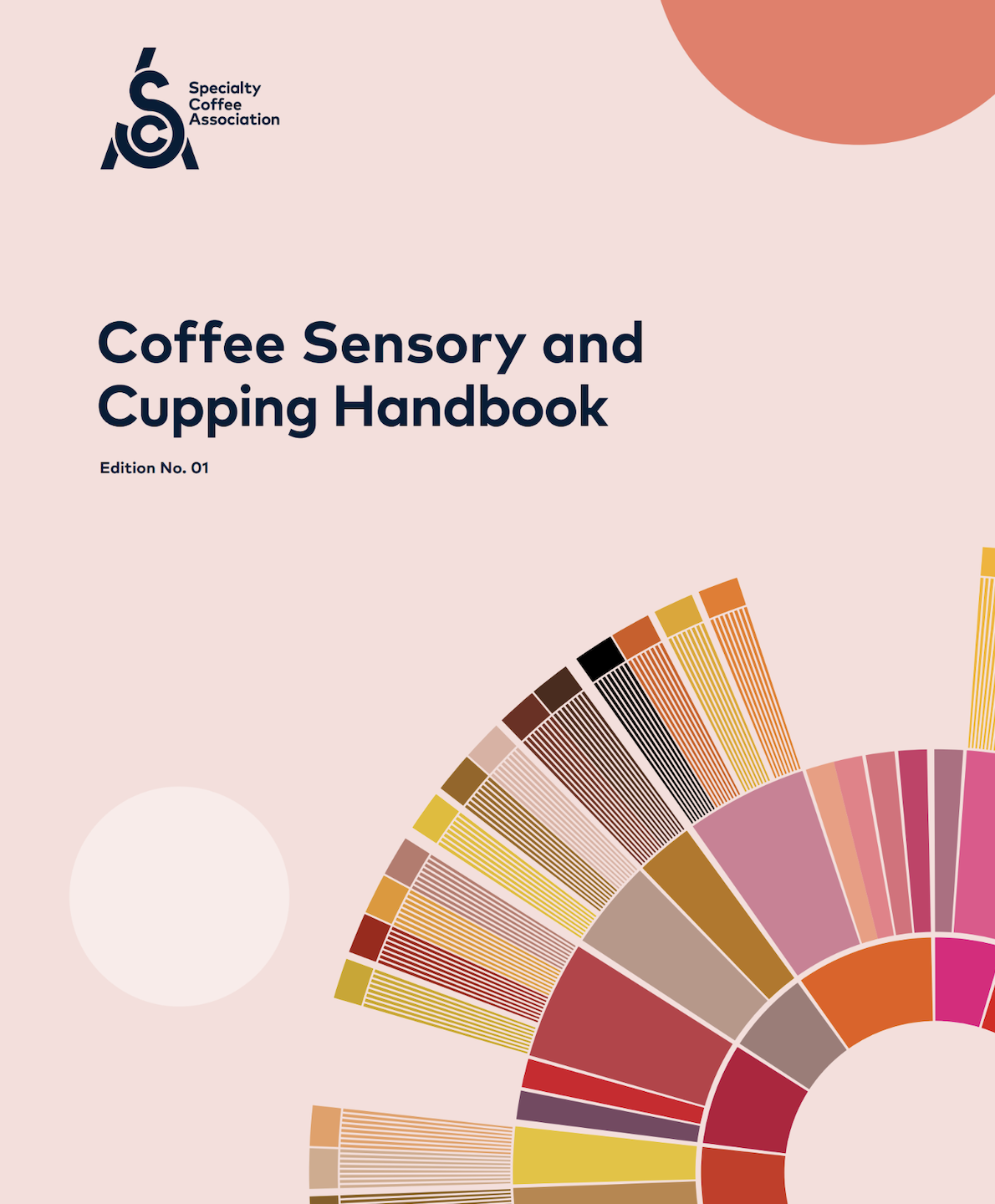
Chapter 8 of the SCA Coffee Sensory and Cupping Handbook covers the “Tactile Dimensions of Coffee,” including body and astringency.
You can purchase the handbook here.
APPLY THIS IN YOUR WORK
The Coffee Value Assessment Descriptive Assessment Standard defines mouthfeel and the terms used in the Descriptive Assessment form: rough, oily, smooth, mouth-drying, and metallic.