

Coffee Decoded: What Makes Coffee Bitter?
Welcome to Coffee, Decoded, the Specialty Coffee Association’s weekly column on science, research, and all things coffee knowledge. I’m PETER GIULIANO, and each week I answer coffee questions, interpret research, and dive deep into coffee science.
Of all the foods and beverages in the world, coffee is the one most often associated with bitterness. People think of coffee as definitively bitter: “Want to taste bitterness? Try coffee.” “What does coffee taste like? Bitter.”
The truth is, many, many foods are bitter. When tasted, most wild plants are bitter to some degree—and this is a clue to the function of bitterness in nature. The bitter perception is our body’s way of being cautious about what we eat: if something is a potential toxin, we tend to perceive it as bitter. For this reason, a huge number of compounds—especially the chemicals plants make to protect themselves against predators—taste bitter to us. In this way, bitterness is different from other tastes: only two salts taste salty, and only a few acids taste sour. But over one thousand compounds taste bitter.[1] Bitterness is the taste of danger: when a compound might be poison, it tastes bitter to us.
However, some compounds that taste bitter are actually beneficial to us. Dark green vegetables are bitter tasting, but many of the chemicals that make them so are positive, healthwise.[2] And so it is with coffee: many of the compounds that make coffee attractive and healthy, including caffeine and antioxidants, are somewhat bitter. This is the paradox of bitterness—it evolved to keep us safe from poison but is sometimes a signal of quality and health benefits. Perhaps because of this, many cultures and individuals develop a desire for specific kinds of bitterness in foods—especially coffee. In other words, bitterness can be a good thing in coffee!
All that said, not all coffees are equally bitter. Since bitterness comes from such a wide variety of chemical compounds, there are many diverse sources of bitterness in coffee. Here are a few things that seem to influence bitterness in coffee:
Genetics
We consume several species as “coffee,” and there exists genetic diversity even within these species.[3] Coffea canephora—often known as “robusta”—tends to have more bitter-tasting compounds than Coffea arabica,[4] so coffee experts pay special attention to this taste when evaluating coffees of this species. Even within species, different varieties may exhibit differing bitterness levels (and caffeine levels).[5]
Agriculture and Processing
The biggest agricultural factor in coffee bitterness seems to be coffee’s ripeness when picked. Immature coffee is often more bitter and astringent than an equivalent coffee picked at full ripeness.[6] For this same reason, certain coffee “defects” are known to have elevated bitterness. Processing doesn’t seem to affect bitterness much—though it can certainly influence a coffee’s acidity, which can have a modulating effect on bitterness perception.
Roasting
One of the most significant sources of bitterness in coffee is roasting. In a recent study that identified specific bitterness-causing compounds in coffee, all the compounds were found to be related to roasting.[7] We coffee pros know this intuitively—the browning reactions that darken coffee in the roast can create bitter-tasting compounds, and controlling the roast is the easiest way to manipulate a coffee’s bitterness.
Brewing
Even brewing can magnify a coffee’s bitterness: research has shown that coffees extracted in certain ways will be more bitter than others.[8] One factor is how concentrated a brew is, measured as total dissolved solids (TDS). Coffees with high TDS tend to taste more bitter than coffees with low TDS. Coffee can also develop bitter flavors if it's held over time.[9]
At the end of the day, bitterness is one factor in coffee that deserves our attention: it can be pleasant or unpleasant, a delicious element of coffee flavor or an acrid distraction. Research continues on sources of bitterness, and coffee professionals continue to control it through our skills, from farm to coffee bar.
Have a question or topic you want explored in Coffee Decoded? Email editor@sca.coffee
References
[1] RS Ives, S Jaffari, K Siem, MY Niv, “Intense bitterness of molecules: Machine learning for expediting drug discovery,” Comput Struct Biotechnol J. 2020, https://www.sciencedirect.com/science/article/pii/S2001037020305559.
[2] L. Bell, O. O. Oloyede, S. Lignou, C. Wagstaff, L. Methven, “Taste and Flavor Perceptions of Glucosinolates, Isothiocyanates, and Related Compounds,” Mol. Nutr. Food Res. 2018
[3] Coffee Decoded, A Multi-Species World, 2026, https://sca.coffee/sca-news/coffee-decoded-1-a-multi-species-world.
[4] Denis Richard Seninde and Edgar Chambers, IV. "Coffee Flavor: A Review" Beverages, 2020, https://doi.org/10.3390/beverages6030044.
[5] Denis Richard Seninde, and Edgar Chambers, IV, 2020.
[6] Denis Richard Seninde, and Edgar Chambers, IV, 2020.
[7] Chengyu Gao, Edisson Tello, Devin G. Peterson, “Identification of compounds that enhance bitterness of coffee brew,” Food Chemistry, 2023, https://doi.org/10.1016/j.foodchem.2023.135674.
[8] Scott C. Frost, William D. Ristenpart, W.D. and Jean-Xavier Guinard, “Effects of brew strength, brew yield, and roast on the sensory quality of drip brewed coffee,” Journal of Food Science, 2020, https://doi.org/10.1111/1750-3841.15326.
[9] Denis Richard Seninde, and Edgar Chambers, IV, 2020.
Learn More
READ.
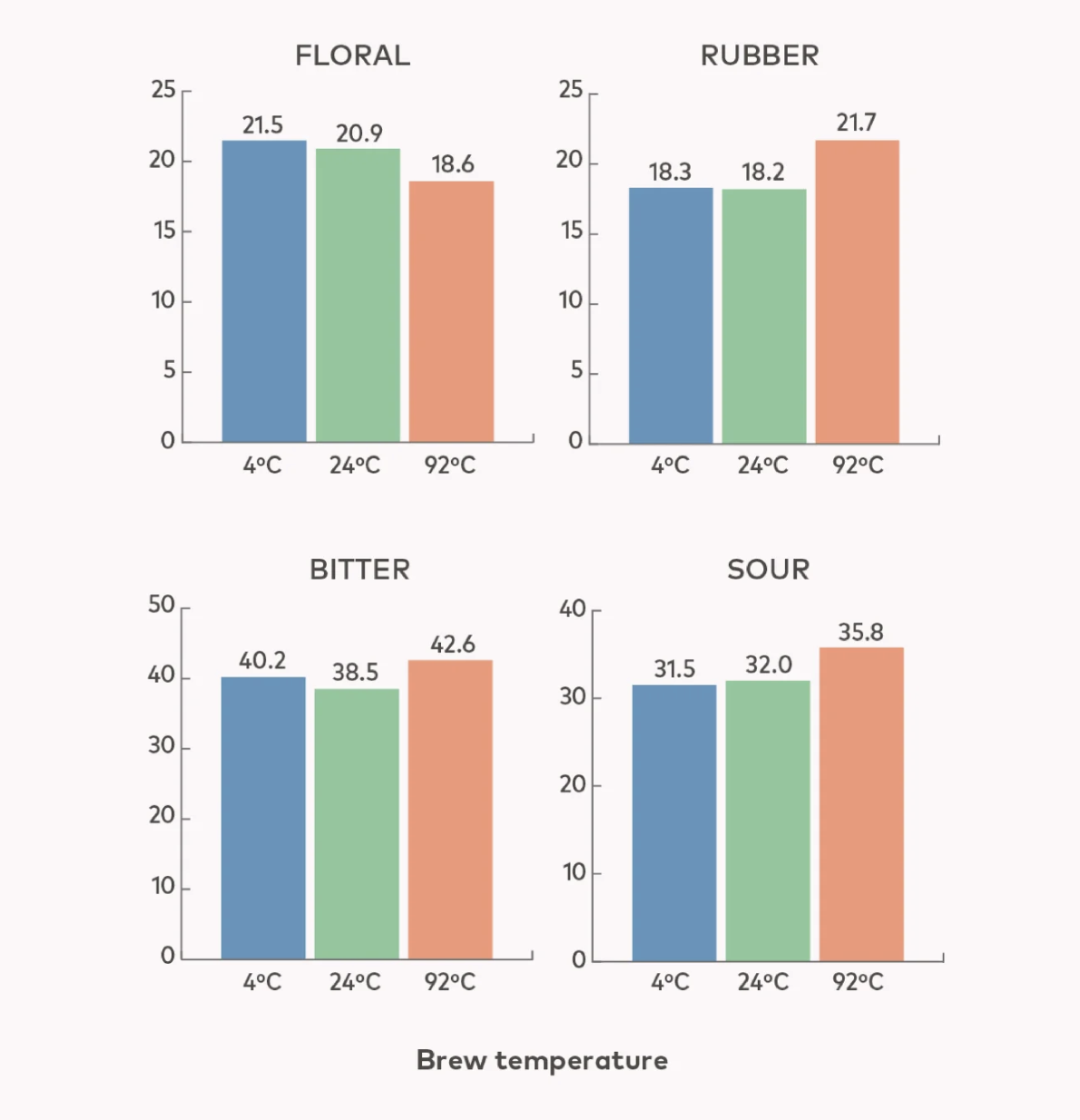
A team of researchers from UC Davis Coffee Center explain how bitterness and other characteristics differ between cold brew and chilled hot brew in 25, Issue 22.
To read, create a free account or login to the SCA Portal.
READ.
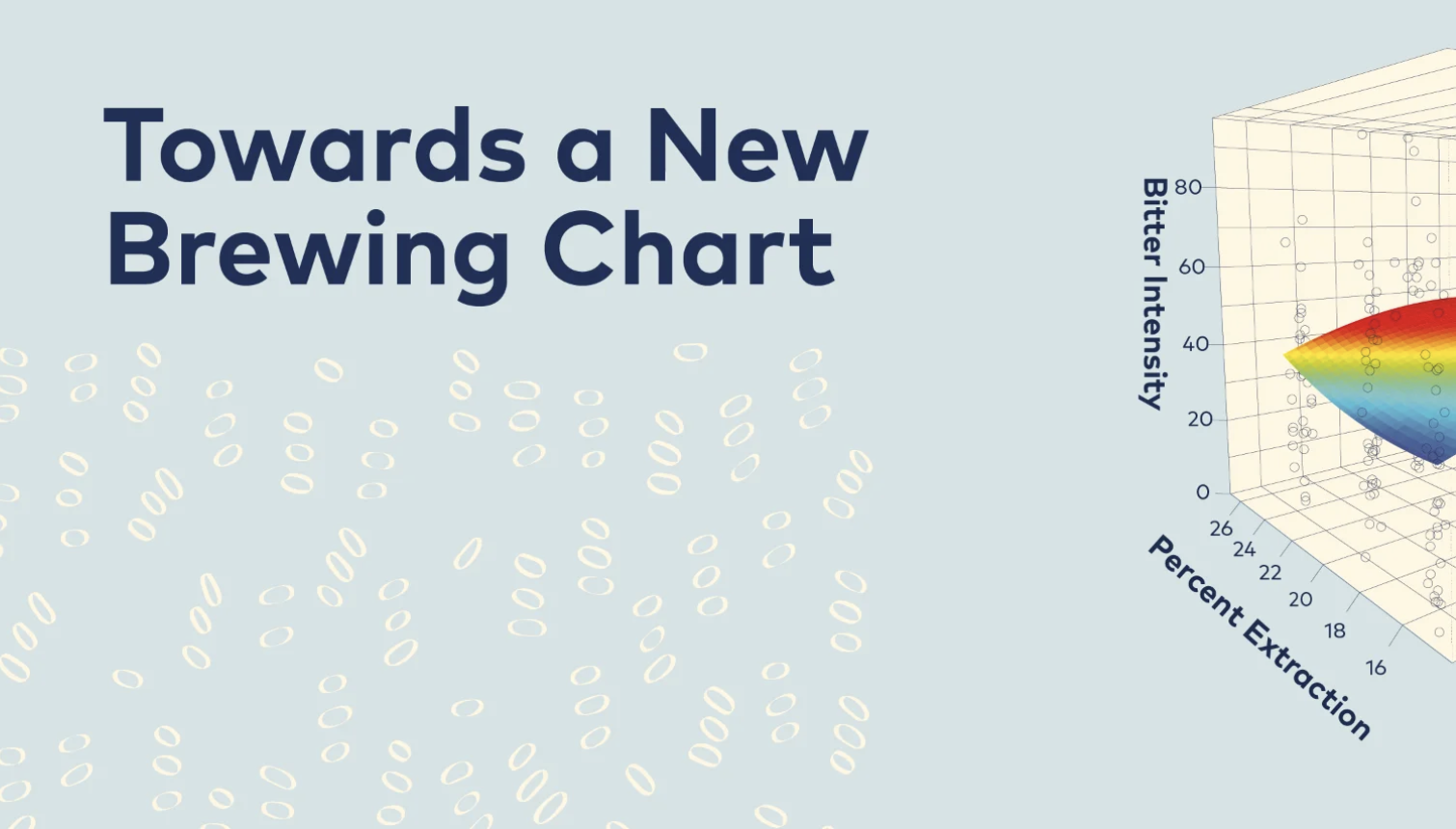
Scott Frost, Mackenzie Batali, Jean-Xavier Guinard, and William D. Ristenpart share a plain-language summary of their research towards a new brewing control chart in 25, Issue 13.
You can read the article here and find the full 25 archive via the SCA Member Portal.