

Welcome to Coffee, Decoded, the Specialty Coffee Association’s weekly column on science, research, and all things coffee knowledge. I’m PETER GIULIANO, and each week I answer coffee questions, interpret research, and dive deep into coffee science.
From time to time, you’ll hear the term terroir used in coffee. It’s generally defined as “taste of place”: the way that a coffee’s flavor reflects its geographical origin. That’s enough of a definition for many conversations, but sometimes, we might want to dig a little deeper. What does this “taste of place” really mean, and how does it work? Is it a romantic concept or a scientific one? Is it even real? Let’s get into it.
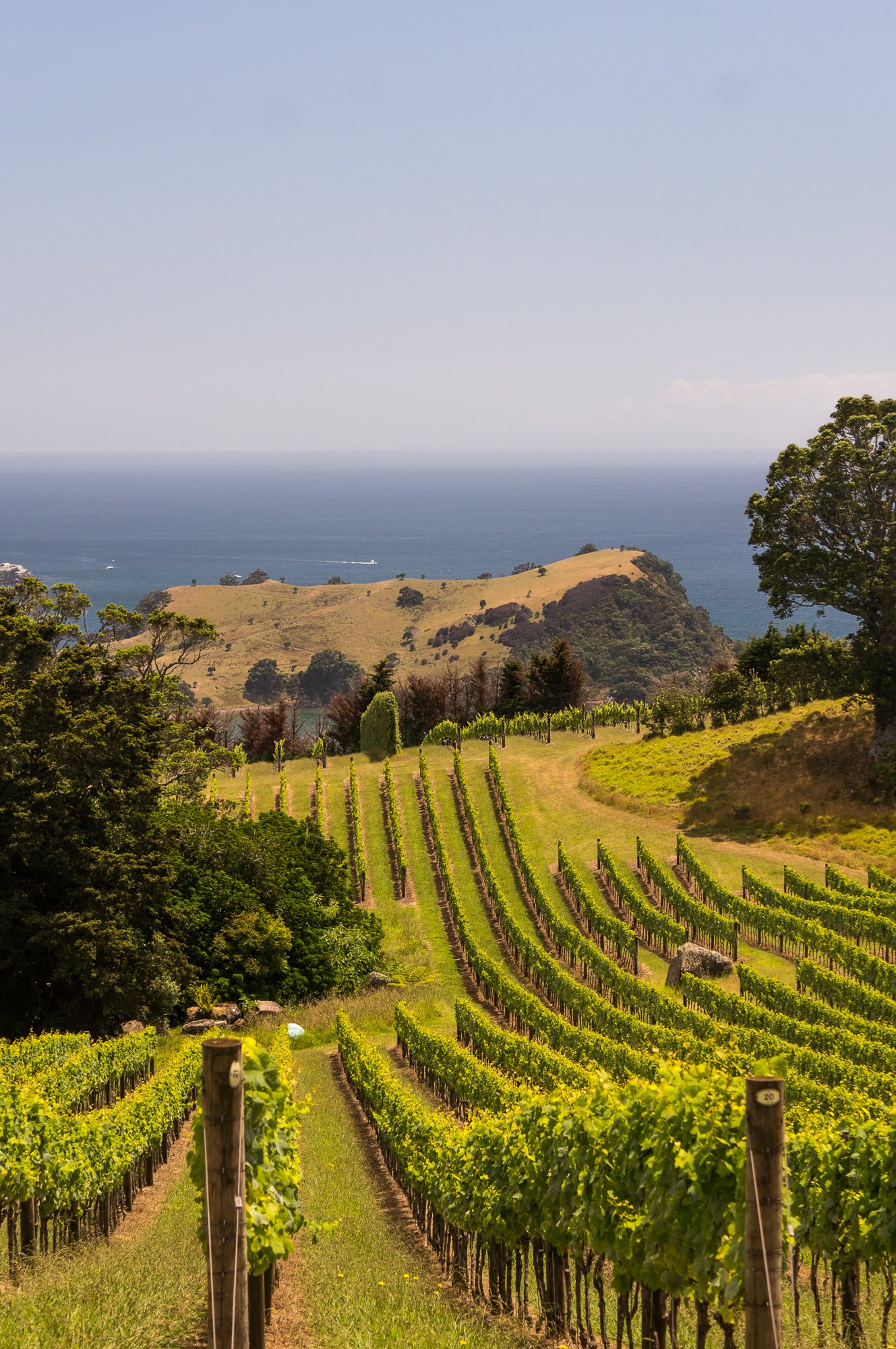
Vineyards on Waiheke Island, a subtropical volcanic island in New Zealand. “Terroir” is a term commonly associated with wine and often used to evoke a “taste of place.” Source: Wikipedia Commons.
For thousands of years, agricultural societies have noticed that crops vary according to their location. In some places, barley might grow tall and strong, while in other places it struggles to survive. Lentini, Sicily became recognized by the ancient Romans for the quality of wheat it produced,[1] while the central Valley of Mexico was highly regarded by the Aztecs as a production region of the nopal cactus.[2] Wine produced in Germany was very different from Greek wine, while Spanish wine differed from both. Within France, this geographic diversity was especially well documented, and it became a kind of shorthand to attribute these differences to differences in the soil itself. The term eventually used to describe this geographical-gastronomic phenomenon was terroir, “of the land.”
However, even in the old days people knew the difference wasn’t the soil alone. Regional precipitation patterns, ambient temperatures, and wildlife all influence the quality of crops of all kinds. As the French developed the concept of terroir, it became more expansive, including what we would call the local microclimate and microbiome.
But what about Champagne, the region known for its distinctive sparkling wines, made by a special fermentation procedure? What about process? Is that a part of terroir too? Is the work of the farmer and the winemaker a part of terroir, just as the weather and soil are? What about the variety the farmer chooses to plant, or how they prune the vines?
This controversy is unresolved in the wine world even today. Some define terroir as the geographic and natural environment only;[3] others include human tradition and cultivation in the definition.[4]
But we’re not here to talk about wine; we’re here to talk about coffee. Differences in coffee according to geography have been noticed for a long time—the early coffee trade sharply distinguished coffees from Yemen (Moka) and Java (Indonesia). In the 1922 edition of All About Coffee, Ukers describes 20 geographical “growths” of coffee, with over 350 specific subregions. (Notably, he never uses the term terroir.)[5]
During the specialty coffee revolution of the 1960s and later, coffee people began overtly comparing coffee regionality to wine terroir, and eventually we adopted the term ourselves—perhaps largely due to specialty coffee pioneer George Howell, who named one of his roasting companies Terroir.
But controversy about the term came along with its use. Does terroir in coffee refer to cultivation as well as climate and soil?
Once upon a time, the answer to this question would have been easy: people produce coffee in a region the way they produce it, using local varieties, agricultural techniques and processing styles. They have developed those styles in harmony with local soil, weather, and resources. All of these interact to create a sense of terroir—from the brilliantly blackcurrant-tinged washed Kenyan coffees of Nyeri to the earthy, full-bodied wet-hulled coffees of North Sumatra, to the sweet, nutty tree-dried naturals of Brazil. But then coffee producers began to experiment and innovate outside of local tradition.
In the past 50 years, we’ve seen coffee farmers growing African coffee varieties in Latin America, seen processors using Central American washing techniques in Indonesia, and borrowing fermentation techniques from the wine and beer industries. What, then, of terroir? If a coffee is made in Colombia using an Ethiopian variety and sundried processing technique, and it tastes like a Sidamo, what is its terroir?
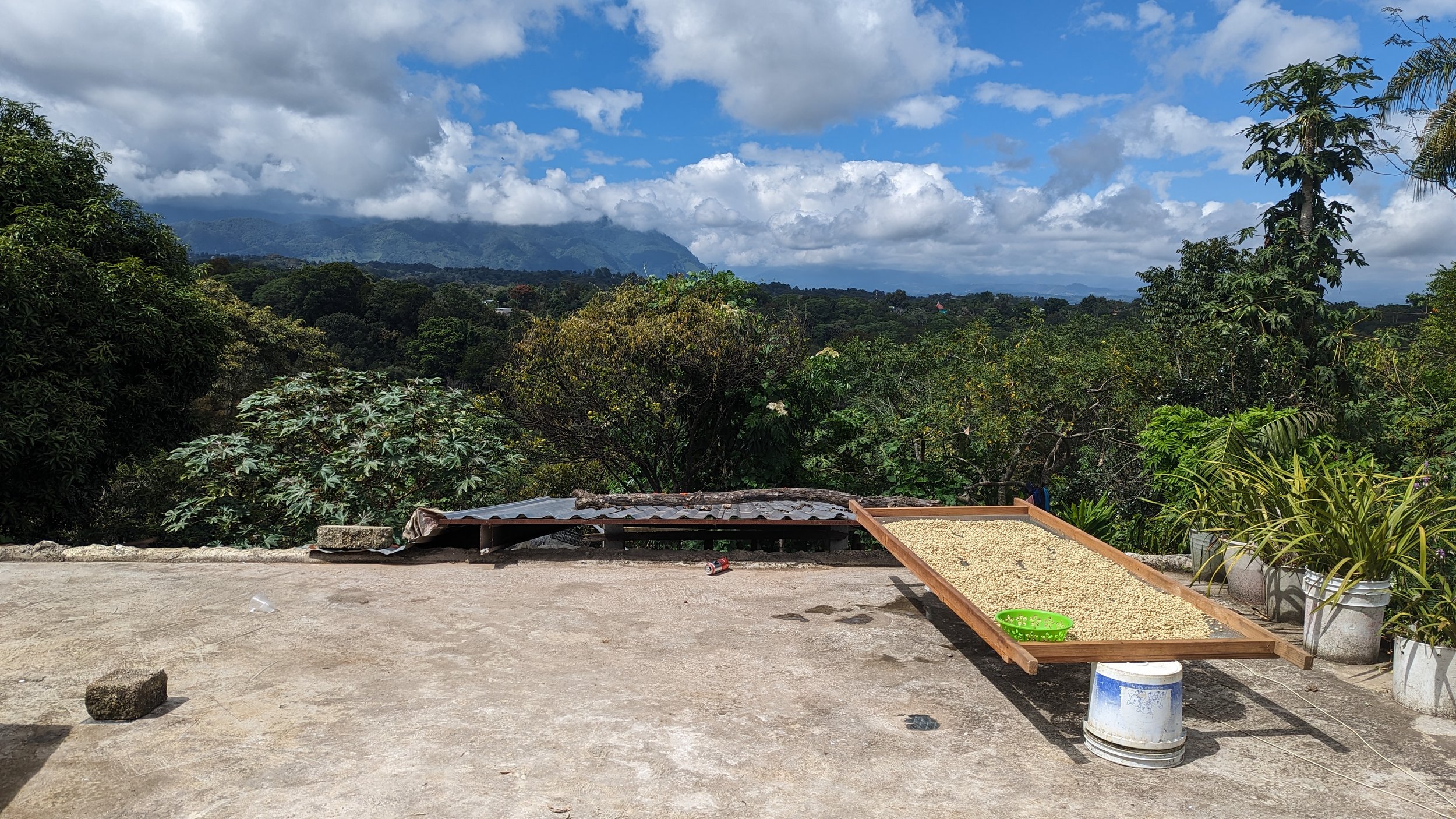
Coffee drying on a rooftop overlooking forests of coffee, fruit, and nut trees in Veracruz, Mexico. The soil, microclimate, choice of varieties, cultivation, and post-harvest processing methods all impact the flavor of the coffee.
It is this very complexity that makes terroir troublesome as a scientific concept. As Cornelis Van Leewen, a renowned expert on the concept of terroir in wine, writes: “…terroir is difficult to study on a scientific basis because many factors are involved, including climate, soil, cultivar and human practices, and these factors interact.”[6] Though, certainly, traditional elements of terroir such as soil microbiology, climate, precipitation, and altitude might be studied scientifically, and cultivation factors like seed genetics, pruning, harvesting, fermentation, drying, and hulling might be investigated through research, it is perhaps best to consider terroir a human concept bringing all of these together. Terroir, therefore, may be best understood as a cultural term rather than a scientific one.
References
[1] Geoffrey E. Rickman, "The grain trade under the Roman Empire," Memoirs of the American Academy in Rome 36 (1980).
[2] Leandris Argentel-Martínez, Catarino Perales-Segovia, Ernesto González Gaona, Alberto Margarito García Munguía, and José Aurelio Leyva Ponc. "Introducción al cultivo del Nopal." El Nopal: ecofisiología del nopal en México (2024): 7.
[3] https://www.vivino.com/en/wine-news/terroir-what-is-it-and-why-is-it-controversial
[4] https://www.oiv.int/node/3362
[5] William Harrison Ukers, All About Coffee, The Tea and Coffee Trade Journal Company, 1922.
[6] C. Van Leeuwen, & G. Seguin, (2006), “The concept of terroir in viticulture,” Journal of Wine Research, 17(1), https://doi.org/10.1080/09571260600633135.
Learn More
READ.
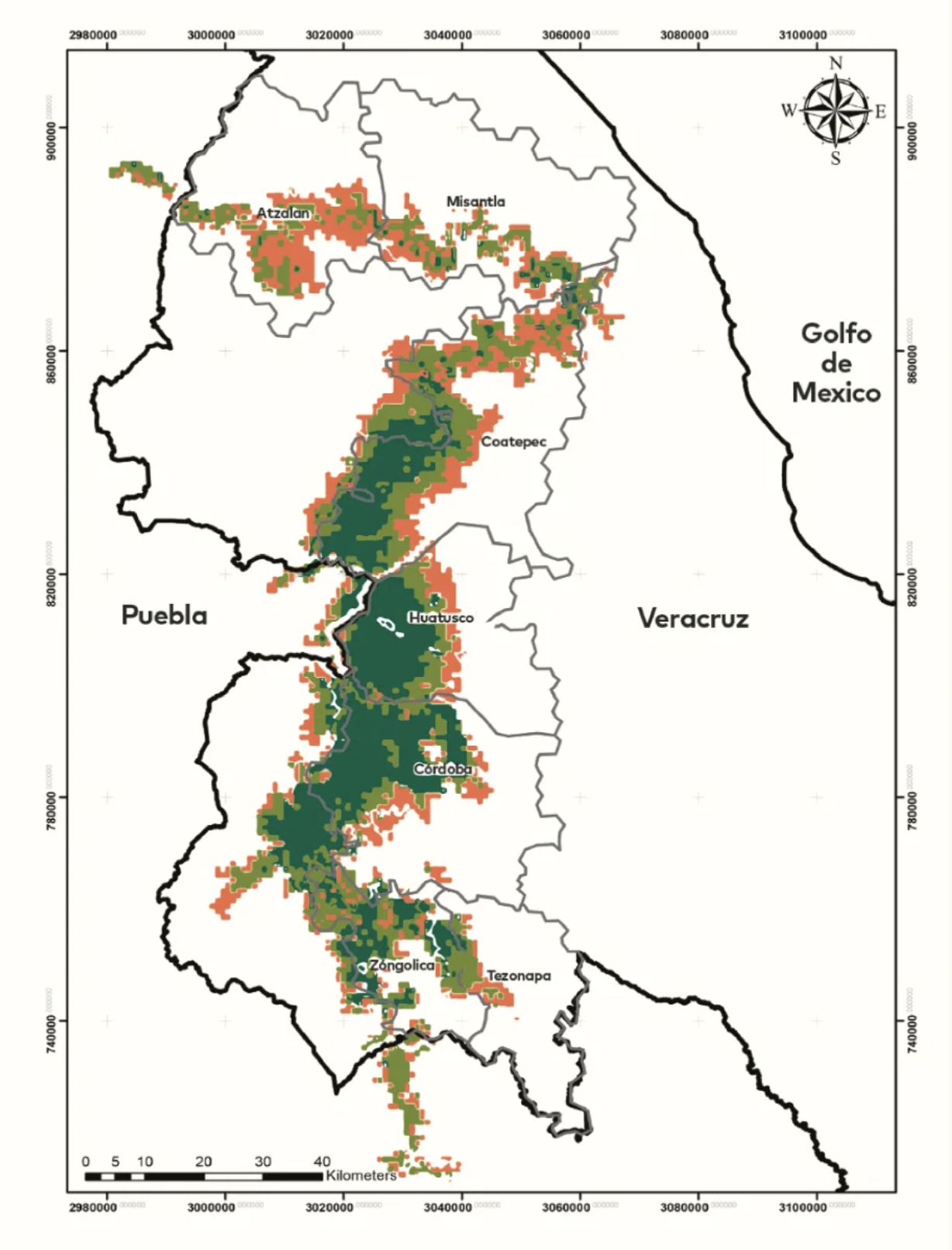
LORENA PIEDRA CASTILLO shares her research about how changes to climate may impact coffee flavor in different areas of Veracruz, Mexico.
You can read the article here and find the full 25 archive via the SCA Member Portal.
READ.
NOA BERGER explores how the coffee sector has adopted terms, like “terroir” from the wine and cacao sectors.
You can read the article here and find the full 25 archive via the SCA Member Portal.