

Coffee Decoded: Why is Roast Level so Important to Consumers?
Welcome to Coffee, Decoded, the Specialty Coffee Association’s weekly column on science, research, and all things coffee knowledge. Each week, PETER GIULIANO answers complex coffee questions, interprets new research, and dives deep into the science, putting it all in a fun, understandable format.
CONSUMERS CARE ABOUT ROAST LEVEL
Imagine a coffee consumer standing in a grocery aisle, surveying the specialty coffees on offer. If they are unfamiliar with the coffees on the shelves, their job is a challenging one: they want find a coffee that will suit their tastes and meet their needs and the expectations of their family. And to do it, they need to rely on the information they are given—the information on the coffee label. What information do they use to make their decision? Consumer researchers have asked this question, and one thing is clear: consumers care a lot about roast level.
What makes me say this? The research is amazingly clear on this point. Independent consumer studies from the National Coffee Association, Ohio State University, and the Coffee Sensorium all say the same thing: of all the information given on a coffee label, roast level is the most important to specialty coffee consumers. Other kinds of information—like country of origin, flavor notes, and certifications—are important too, but roast level consistently tops the list. Why?
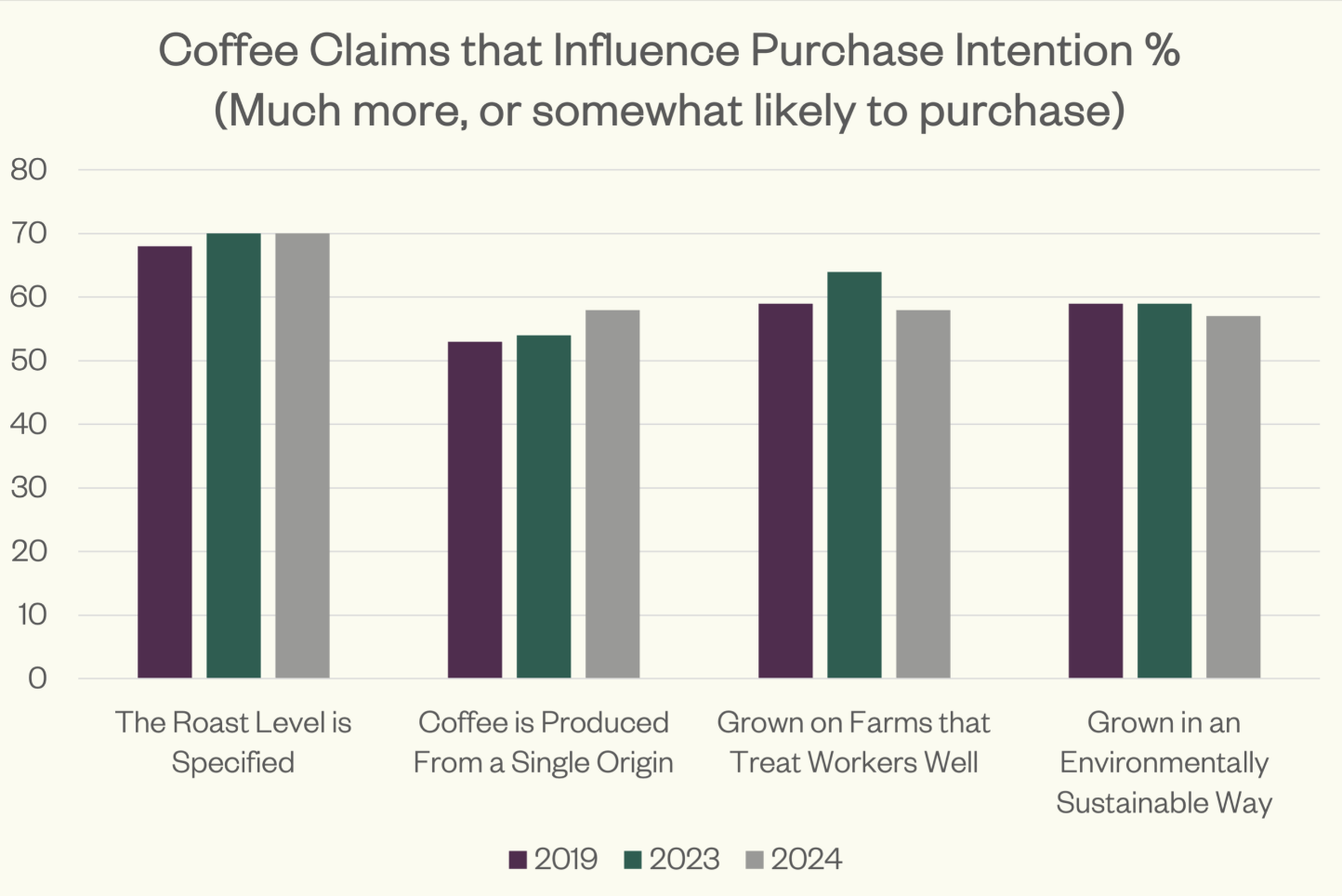
The National Coffee Association conducts an annual survey of US coffee consumers. These are the top four coffee claims that influence purchase intention. The specification of roast level consistently tops the list of most influential claims. Data taken from National Coffee Data Trends Specialty Coffee Breakout Report, 2025.
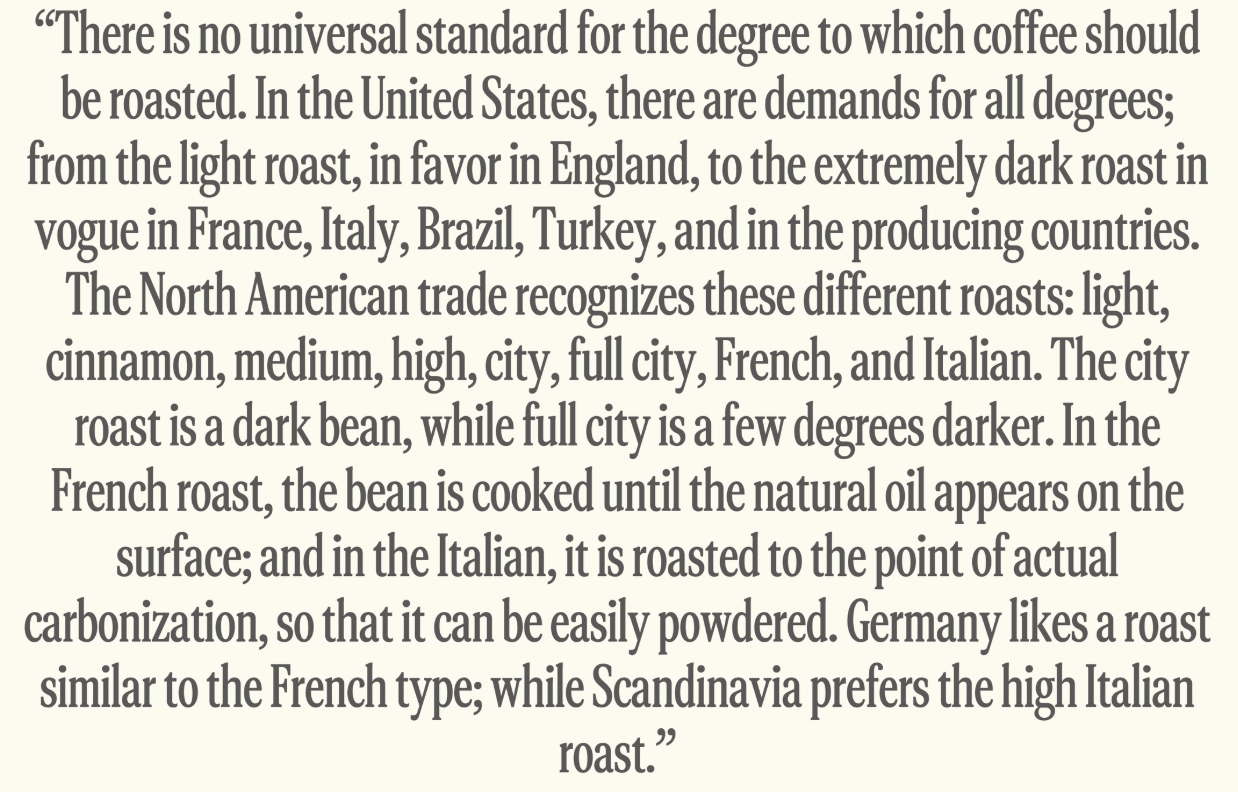
In the early days of commercial coffee, roast level was rarely mentioned to consumers. The coffee industry used coffee roasting terms. In William Ukers’ famous book “All About Coffee” from 1928, he mentioned eight roast levels: light, cinnamon, medium, high, city, full city, French, and Italian. But these terms were for internal industry use only, they rarely or never appeared on coffee packages. Coffee wasn’t about craft in those days—it was about brands and blends.
By the 1960s, those coffee brands were sold in cans and used terms like “rich,” “bold,” and “mountain-grown,” rarely anything pertaining to roast level. However, when the specialty coffee movement began in the late 1960s, quality-oriented roasters immersed themselves in the craft of roasting, which relied on descriptive terms for roast level, like “French Roast” and “Light Roast.” Wishing to communicate their commitment to craft, they included these terms on the coffee descriptions. Over time, coffee consumers became aware of the importance of coffee roast level, due to the persistence of a cadre of specialty roasters committed to education, transparency, and communication.
Today, specialty coffee lovers know that roast level is a good indicator of flavor. And they’re right. Of all the processes coffee is subjected to, from farming to extraction, nothing affects a coffee’s flavor quite as much as the degree of roast. A study from 2020 showed that roast level was the most powerful driver of coffee flavor,[1] outpacing several other variables.
Coffee pros know this too: they often obsess over roast level. It makes sense. The cascade of chemical reactions that create coffee flavor are driven by the temperature of the roaster, the time spent in the roaster, and the shade of brown the coffee ultimately reaches. It’s therefore rational for a consumer to inquire about the roast level before they purchase it—they know that a dark roast is likely to give them chocolatey, bittersweet flavors and a light roast will maximize fruity and floral notes. But they may also be confused. Terms like “French,” “Italian,” and “Full City” may be too arcane or flexible to be meaningful. Recently, coffee experts gathered to discuss this issue at a conference in San Diego. They asked: are we using these terms consistently? Would it be worthwhile to standardize roast levels as an industry, or celebrate a roaster’s desire to frame roast level in their own way?
There is a lot to discuss and learn, but at the end of the day, consumers are telling us something very clearly: that they care about roast level, and they make purchasing decisions based on it.
- PETER GIULIANO is the SCA's Senior Advisor for Scientific Communication.
[1] Frost, S.C., Ristenpart, W.D. and Guinard, J.-X. (2020), Effects of brew strength, brew yield, and roast on the sensory quality of drip brewed coffee. Journal of Food Science, 85: 2530-2543. https://doi.org/10.1111/1750-3841.15326
Want to learn more?
Read
What Color is Your Coffee?
In 25, Issue 21 University of California Davis Coffee Center scientists LAUDIA ANOKYE-BEMPAH, IRWIN R. DONIS-GONZÁLEZ, and WILLIAM D. RISTENPART describe research undertaken in 2023 with a goal of developing new roast color standards for the coffee industry. Accessible via the SCA Member Portal.
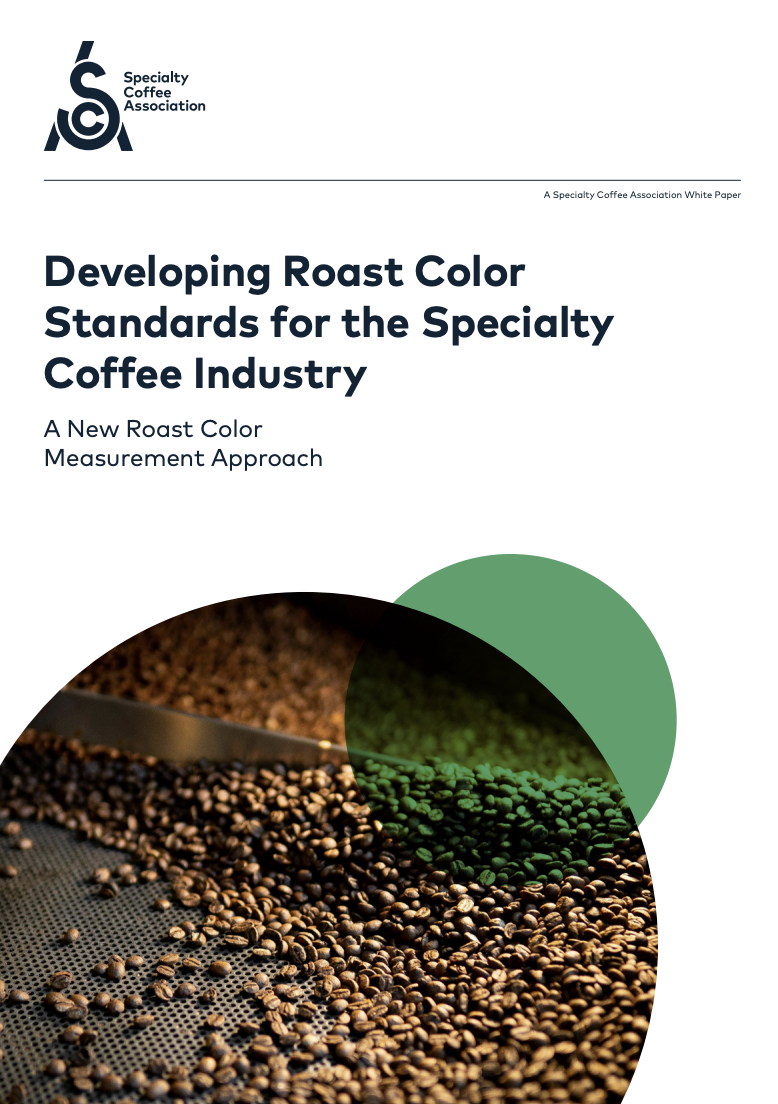
Developing Roast Color Standards for the Specialty Coffee Industry A New Roast Color Measurement Approach
A Specialty Coffee Association White Paper detailing the SCA’s research on roast color: how it is measured and how it has typically been described. Accessible via the SCA Member Portal.
A Universal Color Curve for Roasted Arabica Coffee
A 2025 article in Scientific Reports by Laudia Anokye-Bempah, Timothy Styczynski, William D. Ristenpart & Irwin R. Donis-González about research on Coffee Science Foundation affilitated research on roast color. https://www.nature.com/articles/s41598-025-06601-w