

Coffee Decoded: Flavor from the Fires–Why Roast Color Matters
Welcome to Coffee, Decoded, the Specialty Coffee Association’s weekly column on science, research, and all things coffee knowledge. Each week, PETER GIULIANO answers complex coffee questions, interprets new research, and dives deep into the science, putting it all in a fun, understandable format.
As specialty coffee people, we know that a lot of factors influence coffee’s flavor. Coffee cultivation, place of origin, species, variety, process, altitude, brewing recipe, and extraction all matter—and they matter a lot. But as coffee researchers have measured and compared these various factors, one variable stands out: the coffee’s roast, specifically its roast color.
This shouldn’t be surprising: of all the processes coffee goes through from seed to cup, the roasting is the most intense and transformative. As a raw material, green coffee is a woody seed, without much obvious flavor. To create coffee’s characteristic tastes and smells, it must be roasted. When roasting coffee, we expose it to extremely high temperatures, as high as 250 degrees celcius, driving moisture completely out of the coffee, and triggering a number of chemical reactions. The most important of these reactions are known as the Maillard reactions, named after the French scientist who discovered it. The Maillard reactions works like this: when proteins and sugars are heated together, they form compounds that are (a) brown, and (b) intensely, beautifully aromatic.
Many of these compounds are melanoidins—characteristically dark-colored chemicals (melan means “dark” in Greek). These melanoidins have a malty, nutty flavor and create a sensation of heaviness in the mouth—both important characteristics of coffee. We see this beyond coffee: both bread and beer both derive flavor (and color) from melanoidins. And, the eye can easily detect these compounds in coffee: darker brown=more melanoidins, as well as a bunch of other roast-related compounds.
In short, coffee roasting isn’t just “cooking” the beans, it’s actually creating flavor within them. Much like the plant does during coffee’s growth and microbes do during processing, the heat of the roaster is creating new flavor chemistry in real time while the coffee roasts. It’s a kind of alchemy: flavor emerges almost magically from the fiery crucible of the coffee roaster.
Science has been aware of the importance of roasting and roast color for a long time. In The Springer Handbook of Odor, renowned coffee scientist Chahan Yeretzian says “The most important step in the creation of coffee odor is roasting.”[1] In a review of the academic literature, Morten Munchow and his colleagues compared roast time and roast color and found that “while both parameters were significantly related to coffee flavour, roast colour was the stronger predictor of the two.”[2] In the paper “Effects of Brew Strength, Brew Yield, and Roast on the Sensory Characteristics of Drip Brewed Coffee,” [3] researchers found roast level to have the highest impact on sensory attributes than any of the six variables they measured.
I don’t point this out to minimize the other factors in the value chain of coffee. In fact, the metaphor of the chain is chosen precisely because it emphasizes the importance of each link. If any link fails, the entire chain does too. Good coffee is impossible without the talents and efforts of every member of a coffee’s story. But it is also important for us to realize the crucial importance of roasting in coffee’s taste, AND that the coffee’s color is giving us important clues about its flavor. This makes the measurement and communication of roast color an especially important issue for coffee professionals: understanding roast color benefits anyone who wants to understand a coffee’s flavor.
- PETER GIULIANO is the SCA's Senior Advisor for Scientific Communication.
References:
[1] Yeretzian, C. (2017). Coffee. In: Buettner, A. (eds) Springer Handbook of Odor. Springer Handbooks. Springer, Cham
[2] Münchow, Morten, Jesper Alstrup, Ida Steen, and Davide Giacalone. 2020. "Roasting Conditions and Coffee Flavor: A Multi-Study Empirical Investigation" Beverages 6, no. 2: 29.
[3] Frost SC, Ristenpart WD, Guinard JX. Effects of brew strength, brew yield, and roast on the sensory quality of drip brewed coffee. J Food Sci. 2020
Want to learn more?
Participate
In 2026, the SCA is conducting research on how roast color is measured and communicated. What should "light roast" actually mean — and who gets to decide? SCA is asking the global coffee community to weigh in: Would our industry benefit from formal standards on roast color measurement and designation?
We invite you to share your thoughts in a survey.
Responses are anonymous and take approximately 9 minutes. This is your chance to help shape the future of how our industry talks about roast.
Read
In 25, Issue 21 University of California Davis Coffee Center scientists LAUDIA ANOKYE-BEMPAH, IRWIN R. DONIS-GONZÁLEZ, and WILLIAM D. RISTENPART describe research undertaken in 2023 with a goal of developing new roast color standards for the coffee industry. Accessible via the SCA Member Portal.
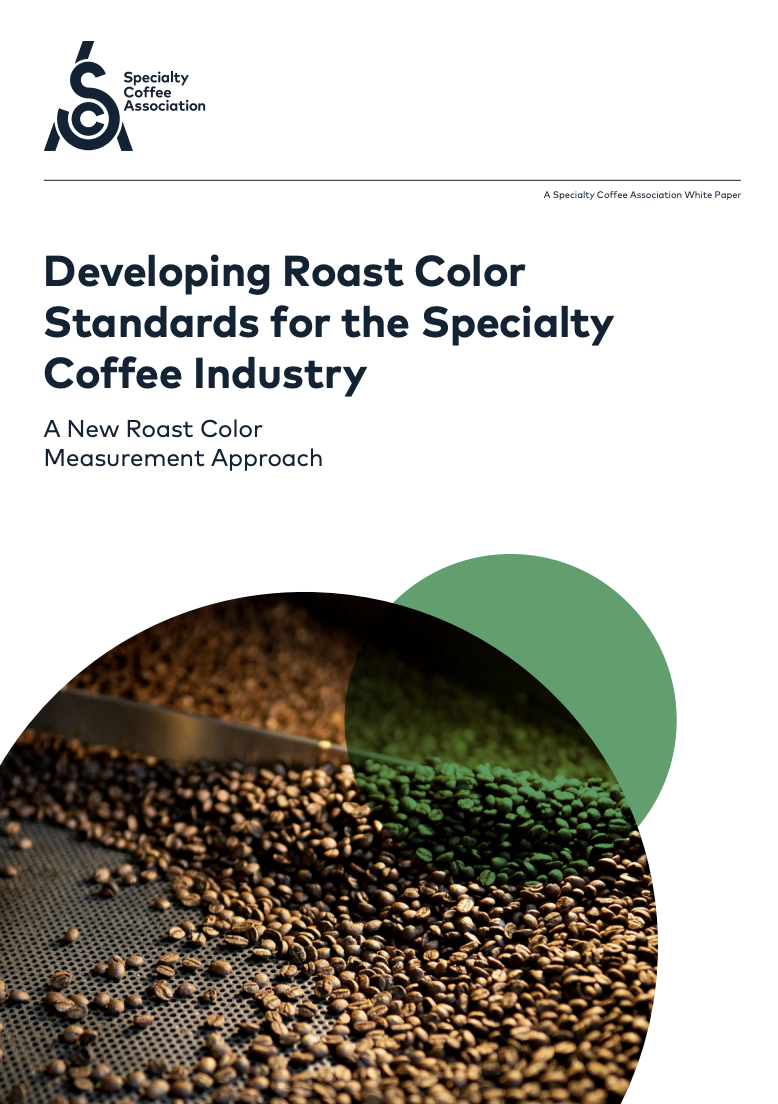
Developing Roast Color Standards for the Specialty Coffee Industry A New Roast Color Measurement Approach
A Specialty Coffee Association White Paper detailing the SCA’s research on roast color: how it is measured and how it has typically been described. Accessible via the SCA Member Portal.
A Universal Color Curve for Roasted Arabica Coffee
A 2025 article in Scientific Reports by Laudia Anokye-Bempah, Timothy Styczynski, William D. Ristenpart & Irwin R. Donis-González about research on Coffee Science Foundation affilitated research on roast color. https://www.nature.com/articles/s41598-025-06601-w