

Making Markets Work: A Participatory Study of Specialty Coffee and Domestic Value Chains for Farmers| 25, Issue 25
An interdisciplinary research team from Switzerland, Bolivia, and Colombia, led by Chahan Yeretzian, Nelson Gutiérrez Guzmán, and Johanna Jacobi, and including researchers Derly Lara, Daniel Castro, Sebastian Opitz, Sabine De Castelberg, Sergio Urioste, and Alvaro Irazoque, worked alongside coffee farmers, processors, and traders to examine which value chain structures improve farmer livelihoods in the Yungas of Bolivia and Huila, Colombia.
Beyond Arabica and Robusta: Research to Redefine Liberica and Excelsa Coffee | 25, Issue 25
Dr. Aaron Davis, Senior Research Leader of Plant Resources and Head of Coffee Research at the Royal Botanic Gardens, Kew, shares the history of Liberica coffee, recent genomic research that has redefined it as three distinct species, and how Liberica and Excelsa’s climate resilience and unique flavor profiles offer new opportunities for the specialty coffee sector.
From Stigma to Specialty: Developing the Canephora Flavor Wheel | 25, Issue 25
Neuroscientist Dr. Fabiana Carvalho explores the specialty coffee sector's perceptions of canephora and how the development of the new Canephora Flavor Wheel could help cuppers better describe and value the species' sensory potential.
Pioneering Specialty Cafés: Coffee Shop Owners and the Rise of Specialty Café Culture in Puebla, Mexico | 25, Issue 24
Scholar and PhD candidate JORDAN BUCHANAN shares their research into the rise of the specialty café scene in Puebla state, Mexico, focusing on the journey and testimony of coffee-shop owners.
Beyond Sugar and Milk: How Brazilians Pair Coffee with Food | 25, Issue 24
PhD student ANNA LUIZA SANTANA NEVES shares their research into Brazil’s everyday and culturally informed coffee and food pairings, from pão de queijo to chocolate.
An Evolving Landscape: How Domestic Consumption Is Slowly Redefining Kenya’s Coffee Identity | 25, Issue 24
Communications expert and researcher DANIEL MURAGA shares insights into Kenya’s domestic specialty coffee consumption, tracing how migration, economic shifts, and urbanization have fueled a dynamic local café and roasting scene, blurring the distinction between “producing country” and “consuming country.”
Who Knows What? Market Information Access for Small Specialty Coffee Farmers in Tolima, Colombia | 25, Issue 23
GUSTAVO PEÑA and JHON JAIRO VEGA DÍAZ share the results of a study with 52 smallholder farmers in Tolima, Colombia, exploring the challenges they encounter in accessing market information.
The Gendered Coffee Paradox: Mapping a Deeper Analysis of Gender Inequity | 25, Issue 23
Dr. ERIKA KOSS discusses her PhD research that focuses on the experiences of women coffee farmers in Kenya, and a problem she names as the Gendered Coffee Paradox.
The Roots of Robusta: Cultivating Growth for a Species Once Overlooked | 25, Issue 22
World Coffee Research’s MAEVE HOLLER and Dr. ROBERT KAWUKI write about how the organization is fast-tracking innovation for robusta to forge the future of coffee.

What You Know Matters: The Impact of Storytelling on Coffee Professionals’ Sensory Perception | 25, Issue 21
Corresponding author MATEUS MANFRIN ARTÊNCIO shares the findings of a recent paper, “The Impact of Coffee Origin Information on Sensory and Hedonic Judgment of Fine Amazonian Robusta Coffee,” published in the Journal of Sensory Studies, confirming the significant influence of origin information on the sensory perception of professional coffee tasters.
From Passive to Active: Expanding Our Understanding of Specialty Coffee Consumerism | 25, Issue 21
ALEXA ROMANO explores the emergence of specialty coffee culture as an embedded subculture within the broader coffee industry, and how the resulting shift from passive to active consumption asks us to rethink the consumer’s role in value creation and distribution.
Words of Attraction: Can “Attractive” Linguistic Descriptions Lead to More “Attractive” Coffee for Consumers? | 25, Issue 20
Cognitive psychologist BENTE KLEIN HAZEBROEK and language professor ILJA CROIJMANS explore the role and construction of coffee’s linguistic descriptions—those flavor notes and descriptions across coffee packaging and websites!—in a consumer’s willingness to pay.
Not Just a World of Coffee: Connecting Coffee, Wine, and Cacao | 25, Issue 20
NOA BERGER explores how the “field” of coffee was inspired by (and inspires) related industries like fine wine, cacao, and—more recently—vanilla, and queries its impacts.
Social Innovation: A Design Tool to (Intentionally) Create Value
In the third in a series of features on sustainability frameworks and their relationship to the SCA’s sustainability agenda of equitable value distribution, SCA Sustainability Director ANDRÉS MONTENEGRO explores the concept of “social innovation.”

Doughnut Economics Webinar
SCA Sustainability Director ANDRÉS MONTENEGRO hosts a conversation on doughnuts & coffee with ERINCH SAHAN of the Doughnut Economics Action Lab; discussing how embracing the circular economy can lead the coffee sector to a sustainable future and make coffee better, for all. Register on Zoom for Thursday August 17, at 4pm BST.
Mapping the Market: An Overview of Plant-Based Beverages’ Sensory Attributes | 25, Issue 19
Corresponding author HELEN VAIKMA shares the results of a study market mapping the sensory attributes of five different categories of plant-based beverages.
Managing Uncertainty: The Value of Intermediaries | 25, Issue 19
VAUGHN TAN highlights where uncertainty (which is not the same thing as risk) exists within specialty coffee’s supply chain, and questions whether the industry’s previous emphasis on the “direct” in “direct trade,” combined with a drive to rebuild leaner coffee supply chains, has had unintended side effects.
Coffee and a Doughnut: Understanding “Circular Economy” Frameworks
In the second in a series of features on sustainability frameworks and their relationship to the SCA’s sustainability agenda of equitable value distribution, SCA Sustainability Director ANDRÉS MONTENEGRO explains the concept of the circular economy through the use of a doughnut-and-coffee metaphor.
It’s All in the Mind(set): Understanding the “Climate Justice” Approach
In this series, SCA Sustainability Director, ANDRÉS MONTENEGRO, explores different sustainability frameworks in relation to the SCA’s sustainability agenda of equitable value distribution, beginning with “climate justice.”
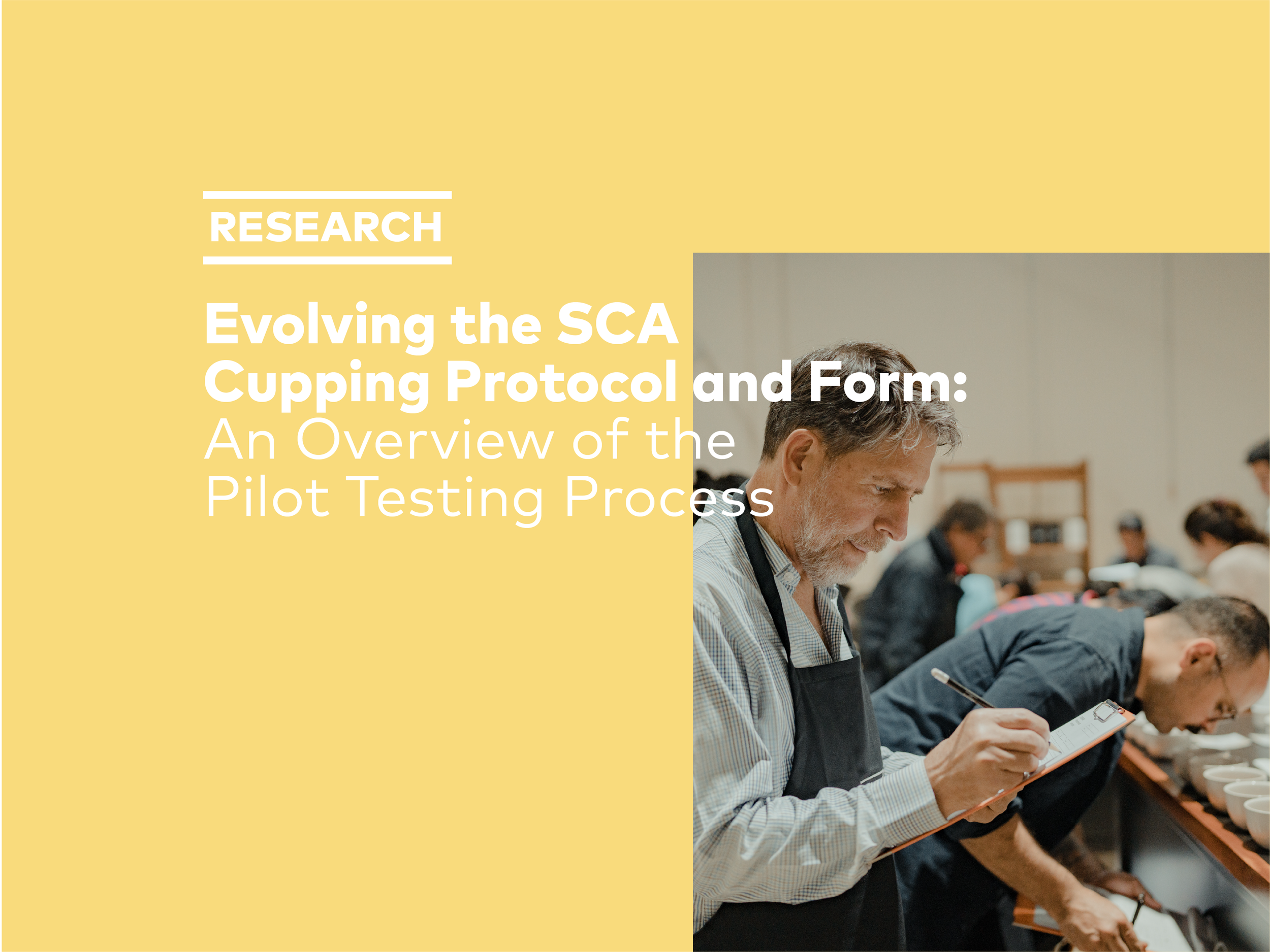
Evolving the SCA Cupping Protocol and Form: An Overview of the Pilot Testing Process
MARIO R. FERNÁNDEZ-ALDUENDA, PhD explains the learnings of the evaluation phase of the SCA’s Coffee Value Assessment System work as well as an update on the pilot process at the heart of the project’s ongoing evolution phase.